Redefining Ambient Music for a Globalized World

Redefining Ambient Music for a Globalized World

8 hours ago

Written by:

Dragoș Rusu

Share article:

Introduction

A few decades ago, ambient music was largely considered an esoteric, fringe interest—relegated to specialized record shops, late-night raves' chill-out zones, or dismissed entirely as elevator cliché. Today, it is arguably the defining sonic backdrop of our lives. From curated Spotify "focus" playlists and TikTok "digital resting points" to avant-garde sound art, the absence of a heavy backbeat has transformed into a global, multi-billion-stream cultural pillar.

But what drove this massive shift? Did the music itself change, or did our collective nervous system simply demand a shelter from an increasingly overwhelming world?

To explore these questions, the international conference Ambient Music: Critical Explorations, Wicked Problems, and Small Wonderments takes place in Copenhagen, Denmark from September 15–17, 2026. Hosted by the Rhythmic Music Conservatory (RMC), the event gathers global researchers and artists to dissect the genre far beyond the traditional, Western-centric narratives of Brian Eno or Erik Satie. The conference positions ambient music not just as an aesthetic preference, but as a global phenomenon, a trauma response, a mechanism of attention regulation, and a tool for sonic care.

I sat down with conference co-organizers Holger Schulze (Professor of Musicology at the University of Copenhagen and head of the Sound Studies Lab) and Ulrik Schmidt (Associate Professor at Roskilde University and author of A Philosophy of Ambient Sound) to discuss the mainstreaming of the background, the politics of algorithmic playlisting, and why ambient music might just be the rock 'n' roll of the 21st century.

Registration for the conference ends on June 15. Don't miss out, sign up here!

The Ambient Paradox: A Distinct Genre or a Universal Mode of Listening?

Photo credits: Holger Schulze, 2020
The conference introduction explicitly asks, 'Why is everybody listening to ambient music these days?'. While the genre has existed for decades, what was the specific catalyst or breaking point that made both of you realize a formal, international academic conference was necessary right now?

Holger Schulze: There were many incidents that provoked us. Personally, I especially remember one day when, by chance, I realised that three very different friends and colleagues, representing different demographics, social classes, cultural environments and biographical backgrounds, had mentioned in passing: "Yeah, I love listening to ambient music." One of them appeared to belong to hardcore and straight edge culture, one might have been categorised as representing cottage core with performative choices leaning towards tradwife drag, and the third clearly represented the cultural niche of avant-garde, third stream or "Echtzeit" music performers and composers. In short, three very different people, four including myself, agreed that they liked a style of music that, forty years ago, would have attracted only rather nerdy, highly specialised aficionados. I wondered: Had a marginal and fringe genre finally become mainstream?

Ulrik Schmidt: Yes, I think what struck me was the feeling that not only had ambient music become more popular, but it had also become strangely normal. Earlier, it occupied a relatively specialized niche. Now, it appears everywhere: it’s on streaming platforms, in film and television, and in gaming and wellness cultures and experimental music scenes. Ambient music has become a significant cultural phenomenon. At the same time, we wanted to broaden the perspective beyond the familiar Western narrative of Satie, Cage, and Eno. If “everyone” is listening to ambient music, what does that mean from a global perspective? What kinds of ambient music are emerging in different places, and what do they have in common?

The conference presentation mentions that ambient 'oozes' into countless other styles, from Krautrock and Gamelan to hauntology and lo-fi hip hop. If ambient music has its roots in everything from radiophonic composition to neoclassic film music, is 'ambient' still a distinct genre, or has it simply become a universal production technique?

Holger Schulze: Indeed, this is a hunch we both had too! However, it's clear that all of these genres, styles and music cultures are crucial constituents of what we might call ambient music today. We were both wondering what you are wondering: how can this be, and how can a musical practice that covers so many other genres be considered one coherent genre in itself? We hope to learn a lot from the local music scenes in Eastern Europe, Japan, South America, and selected African countries at our conference. Do their production techniques differ significantly? Or might we detect some surprising continuity across regions, continents and musical cultures?

Ulrik Schmidt: It’s probably both: a distinct genre and a “universal technique.” Ambient music is still a recognizable genre with its own history, artists, labels, listening traditions, and aesthetic values. But it has also become a way of organizing attention on a much broader scale. Ambient approaches to texture, repetition, atmosphere, and duration can be heard across countless musical forms. What fascinates me is that radically different musical expressions can produce a surprisingly similar mode of listening. A gamelan recording, a piece of industrial drone music, a film soundtrack, and a “sleep” playlist may have little stylistic common ground, yet they might all encourage a certain kind of immersive, peripheral, environmental listening. Whether this observation holds up is one of the questions we hope the conference will address.

What drove this massive cultural reappraisal of ambient music? Did the music change, or did our collective nervous system simply demand it?

Ulrik Schmidt: Today, ambient music is much more diverse than the historical image that many people still associate with the genre. However, our listening conditions have also changed dramatically. I’m interested in how people increasingly use ambient music not only for relaxation but also for concentration, reflection, companionship, sleep, work, isolation, travel, and as part of everyday life. Its functions seem to have expanded enormously. At the same time, the reasons people listen to ambient music are not entirely new. Throughout history, human cultures have developed musical practices connected to rituals, contemplation, work, healing, and social regulation, many of which have clear ambient characteristics. What is new is the extent to which these functions have been commercialized and organized through contemporary media platforms.
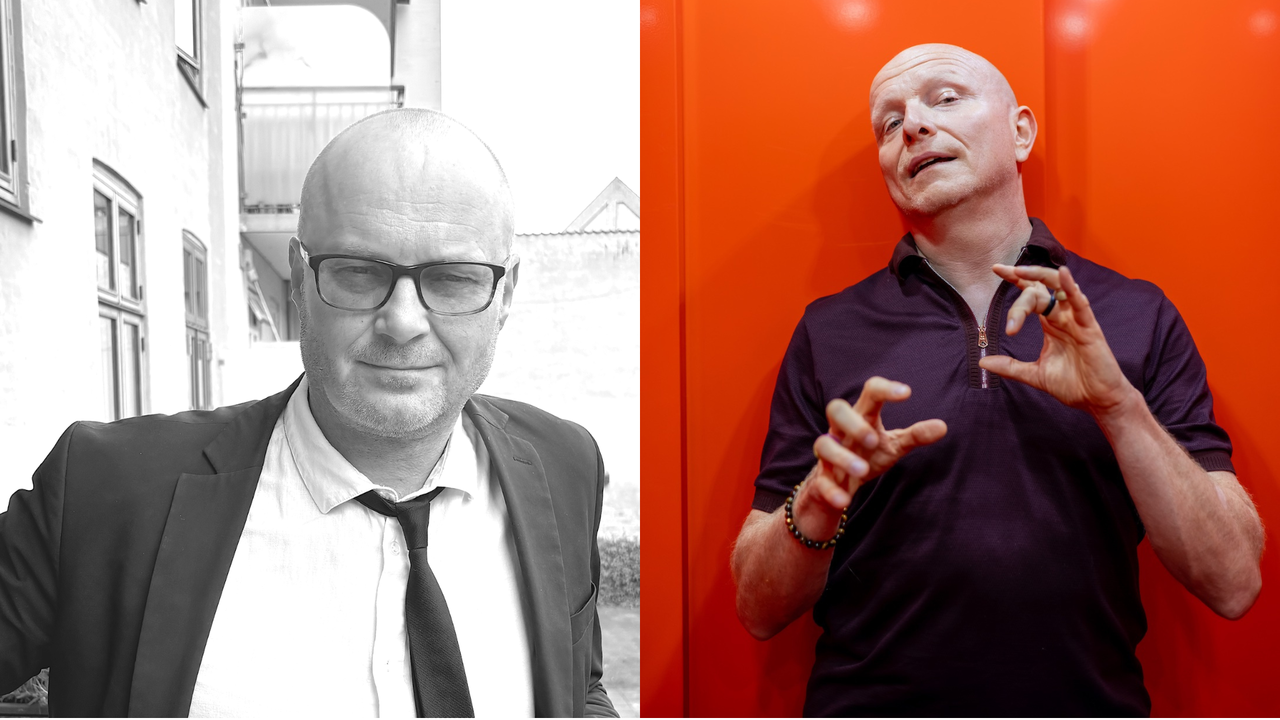
Photo credits: Holger Schulze, 2020

An Invitation, Not a Command: Redefining "Sonic Care" and Healing Environments

We see fascinating threads in the program connecting ambient music to health and trauma—from Evgeny Bylina discussing post-Soviet 'Quiet Music' as a trauma reflection, to Ann-Kathrin Allekotte’s work on TikTok 'digital resting points'. Has ambient music become the definitive sonic coping mechanism for systemic exhaustion? And if so, is there a danger that this music simply treats the symptoms of a burning world rather than challenging the causes?

Holger Schulze: Perhaps I am getting ahead of myself here, but I am certainly looking forward to Anders Bach Petersen's talk at the conference, which is titled "Ambient Music Is Officially Mainstream". My hypothesis is actually precisely what you alluded to: Ambient music does indeed offer a versatile way of coping with societal demands and the pressure of an accelerated, highly mobile work and media culture. It also helps us deal with the increasingly fluid nature of relationships and their flexible attachment styles. Yes, ambient music seems to be as fundamental and highly adaptive as the backbeat, distorted guitar, bass sequencer or drum loops were in previous eras of 20th-century popular music. Could ambient music be the new rock 'n' roll or EDM?

Ulrik Schmidt: I think you’re pointing to one of the most interesting paradoxes of ambient music. It is capable of making us feel both more connected to and more protected from the world around us. It can heighten our awareness of our surroundings, yet it can also serve as a kind of shelter from them. So, yes, ambient music is undoubtedly a coping mechanism. However, I don’t think that automatically makes it politically passive. The risk is always there, of course. Ambient music can aestheticize the problems it addresses. Nevertheless, some ambient works can make complex problems feel tangible and perceptible in ways that statistics, headlines, or political language cannot. Rather than asking whether ambient music is resistant or adaptive, we might ask how different ambient practices negotiate that tension.

Alongside the broader discussions of health and 'Healing Environments,' Rupert Till’s presentation focuses specifically on 'Ambient and Autism'. How is the functional utility of beatless music—with its lack of jarring percussion —being studied as a tool for sensory regulation, and what does this mean for the future of sonic care?

Ulrik Schmidt: I am curious to hear Rupert Till’s presentation because it may help us understand how ambient music functions for different listeners in different listening situations. Ambient music is often described in terms of what it lacks, such as abrupt transitions, aggressive dynamics, climaxes, and intrusive rhythms. Perhaps a more interesting question, though, is what ambient music positively provides. Many forms of ambient music create a sense of continuity, repetition, and gentle persistence. They hold our attention without constantly demanding it. In a culture that often competes aggressively for our attention, ambient music sometimes feels less like a command and more like an invitation. Could this be one way to think about sonic care? Not as music that cures or solves anything, but as music that provides support, shelter, and protection. The word “ambient” itself carries the older sense of a surrounding “embrace.” Perhaps we should take that more seriously.

Decentering the Western Canon: 90s Chill-Out Rooms, Global Rituals, and the Many Histories of Ambient

Brian Eno’s original definition of ambient is heavily rooted in Western, industrialized perspectives of space and background noise. Through the research presented at this conference, how are non-Western and post-Soviet artists redefining what 'ambient' means in environments shaped by entirely different geopolitical regimes and social conditions?

Ulrik Schmidt: Eno remains an important historical reference point. That said, one of the conference’s ambitions is to discover what happens when ambient music is viewed from a much wider perspective.

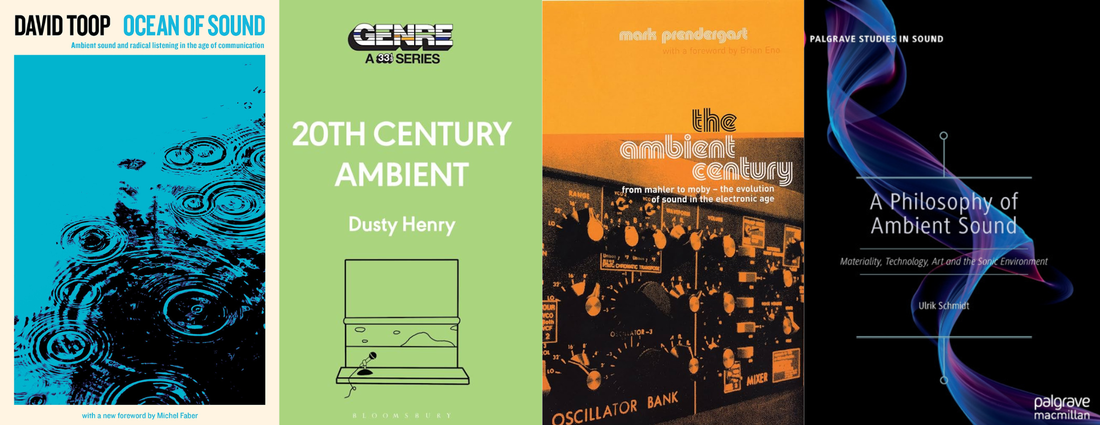
Holger Schulze: Our intention was to draw people's attention to the various forms of ambient music that Joseph Kamaru, also known as KMRU, will address or evoke in his keynote performance "Other 'Ambient' Music". As with any cultural form that has existed for decades and transformed across continents, ambient music is not the same as it was in the late 1970s in the UK. This historical specimen of ambient music was explored and revered at the last international conference on ambient music, which took place in 2018 under the title "AMBIENT @40" in the UK, at the University of Huddersfield. We wanted to move beyond 20th-century ambient music and its historiography, as laid out by Dusty Henry in "20th Century Ambient", by Mark Prendergast in "The Ambient Century", and, lest we forget, the legendary and highly influential book "Ocean of Sound" by David Toop.

Ulrik Schmidt: Yes, instead of asking whether musical practices from different parts of the world fit Eno’s definition, we ask what they reveal about ambient music as a global phenomenon. What happens when we place Japanese, Kenyan, post-Soviet, South Asian, or Latin American histories alongside more familiar Western narratives? We hope the conference will complicate and diversify the story we tell about ambient music. Of course, there is not one ambient history, but many. I am sure Eno would agree.

The conference program includes live performances every day. Ambient music is so often consumed in isolation, heavily reliant on headphones, personal space, and solitary introspection. How does the nature of ambient music change when performed live in a shared, communal space?

Ulrik Schmidt: That’s true. But we sometimes tend to forget that ambient music has always had a collective dimension, too. Whether in rituals, chill-out spaces, concerts, or installations, ambient music often fosters shared attention. You listen not only to the sounds, but also alongside other listeners as part of a social situation. You literally share the environment. In some cases, ambient music can intensify this experience, even when it remains quiet or introspective. This is one reason why performances are such an important part of the conference. We see them as opportunities to explore different forms of ambient listening together.

Holger Schulze: Actually, chilling together within ambient sounds was one of the beginnings of a larger trend towards ambient music. In the 1990s, raves were the first events to have chill-out zones like the ones you mentioned. They played ambient music there to provide a break from the hours of MDMA-fueled dancing and trance on and around the dance floor. Playing ambient music in a communal space harkens back to those beginnings in a sense. While some attendees, however, may have consumed certain chemical enhancement drugs of various origins prior to our conference, we do not require or schedule such practices.
Ambient Music Conference - September 15-17 in Copenhagen

The "Sonic Lubricant" Paradox: Self-Optimization, Ambiguity, and Essential Listening

Ambient music is often explicitly marketed as a tool for 'focus' and 'productivity'—essentially, a sonic lubricant for the modern worker. Is ambient music today subverting the capitalist demand for our energy, or is it just helping us tolerate intolerable working conditions so we can produce more?

Ulrik Schmidt: Ambient music is certainly used in cultures that value productivity, focus, and self-optimization. Immensely so. It’s just that listeners don’t necessarily use music the way platforms, employers, or technologies imagine. The same piece of music can serve as a tool for concentration, an emotional refuge, an avenue for artistic exploration, or simply a source of pleasure. For example, my daughter sometimes listens to “Music for Focus” playlists precisely when she doesn't need to focus. It’s remarkable how ambient music can move between these different functions. Its cultural role is much more ambiguous than its advocates or critics sometimes acknowledge. But yes, one important aspect of contemporary ambient culture that we must be extremely aware of is its growing role in the regulation—and monetization—of attention.

What are some of your favorite ambient music albums? Can you also add some personal reflections on why you chose them specifically?

Ulrik Schmidt: I may be stretching the genre boundaries a bit, but four recordings come to mind: “Cluster II” (1972) by Cluster. I still love the combination of analogue softness, unpredictability, noise, and sonic invention. It feels exploratory without becoming self-conscious. “Aka Pygmy Music” (1973) from the UNESCO Collection of Traditional Music. Despite the outdated title, it’s a great early recording of the fabulous music of the Aka people of Central Africa. The mostly vocal music is complex, intimate, deeply hypnotic, emotionally moving, and environmentally haunting at the same time. “Fantas Variations” (2024) by Caterina Barbieri. Unpredictable psychedelic minimalism. I love the way she works with repetition. Her work feels expressive, organic, machinic, and ambient all at once. “Songs and Instrumentals” (2020) by Adrianne Lenker. The instrumental recordings on this double album seem to hover somewhere between folk music, environmental sound, improvisation, and ambient listening. What a guitar feels like outside a forest cabin during Covid-19.


Holger Schulze: I have a confession to make. KMRU's & Abul Mogard's “Drawing Water” was my favorite album of 2024. This album provided me with a safe yet complex environment that was not trivial. Wherever I was, whatever time it was, and whatever vessel I was traveling in, I felt carried and safe. I discovered new sonic shimmers, intriguing layers, and surprising rhythms every time. I admit that this idiosyncratic preference was one of the inspirations for inviting Joseph Kamaru to contribute to this conference. It is important to us that artistic and musical practices be an integral and driving force in this conference and in our broader conversation over the three days in September. They must not be considered a side thread but rather a major field of contributions to our conversation on ambient music.


Registration for the conference ends on June 15. Don't miss out, sign up here!

Find the full program HERE.
About the Author

Dragoș Rusu

Co-founder and co-editor in chief of The Attic, sound researcher, DJ, and allround music adventurer, with a keen interest in the anthropology of sound.

@dragos_rusu_
Share this Article
Next Article
ACOUSTIC MEMORY

Pirates of the Hertzian Waves: Illegal Radio in Transition-Era Bucharest

Pirate radio stations in post-communist Bucharest functioned as alternative cultural infrastructures, community-building platforms, and mechanisms of legitimation for music excluded from legal FM.

Paul Breazu
More Articles
SONIC TRIGGERS

Sounds of Desire: Slot Machines and the Dopamine Trap

Sounds of desire are not merely cultural artifacts, but potent neurobiological stimuli interacting with profound predictive and affective systems.

Dragoș Rusu
SONIC HISTORIES

Romani Music in Communist Romania: Propaganda, Control, and Resistance

Over four decades of communist rule in Romania, Romani professional musicians known as lăutari lived a paradoxical existence.

Shaun Williams
LANGUAGE OF THINGS

Sonic Eschatologies: Liminal qualities of compos(t)ing culture/community...

As it is obviously impossible to stop questioning the sonic implication of the end, we might take a dive right into the limit, right into the membrane of perception.

Stefan Fraunberger