The Attic presents The Sonic Turn — International Conference · Nov 14–15, 2025
Romani Music in Communist Romania: Propaganda, Control, and Resistance

Romani Music in Communist Romania: Propaganda, Control, and Resistance

2 days ago14-16 minutes read

Written by:

Shaun Williams

Share article:
Over four decades of communist rule in Romania, Romani professional musicians known as lăutari lived a paradoxical existence. Indispensable to the state’s cultural project, they were celebrated as virtuosi of national folklore and enlisted as bards to inspire, unite and pacify the socialist “new man”. Yet the same regime that relied on lăutari for their virtuosity also denied their ethnicity, erased the Romani language from public use, and kept a watchful eye on their performances, movements, and personal lives.

By the fall of Nicolae Ceaușescu’s reign in 1989, Romania’s had one of the largest secret police forces in the Eastern bloc, with over 11,000 agents and nearly half a million informers.1 How did these mechanisms of surveillance and ideological control shape the everyday realities of lăutari under communism? What stories do the secret police archives tell us about lăutari and their lives? And why, despite everything, do so many lăutari today remember the communist era with a kind of nostalgic fondness?

To understand these questions, we need to begin with the abolition of Romani slavery in the mid-19th century—described by historians as “the most important social event in Romania’s modern history” and the country’s “first major social reform”.2 While giving rise to the unified Romanian nation, emancipation also helped to construct a racialized notion of “Romanian” ethnicity centered on imagined ‘Latinist’ and ‘Dacianist’ narratives from which the Roma were excluded.3
Angheluș Dinicu & Sava Pădureanu with their taraf at the 1889 Exposition Universelle. Photo: Paul Nadar, Paris.
Since the founding of the modern Romanian state in 1859, lăutari have been held up as key custodians of Romanian folklore and an essential component of national identity, embodying a virtuosity that the state was eager to showcase abroad. But while lăutari represented an elite among Romani occupational-kinship groups, most Roma lived in abject poverty on the margins of towns and villages, burdened by racialized beliefs of inferiority and otherness rooted in centuries of enslavement.

Beginning in the late 19th century, lăutari from dynasties of conservatory trained musicians became an essential part of Romania’s cultural diplomacy, presented at World’s Fairs not as Romani musicians (and descendents of a people that had endured 500 years of brutal slavery) but clad in peasant costumes as embodiments of Romanian musical genius.

As Romania’s troubled constitutional monarchy gave way to a Soviet-aligned communist regime in 1947, Romani musicians faced new opportunities and new challenges. Over time, the longstanding tension between the state’s exploitation of lăutari and the agency of Romani artists took on new dimensions as the state’s policies toward national minorities evolved to exclude Roma.
Excerpts from the children’s magazine “Luminița” (Little Light), 1954.

The Dej Era: New Songs for New Men

For the first eight years of communist rule, the Party followed a Stalinist model replete with political repression, forced collectivization, and brutal forced labor projects. After Stalin’s death in 1953, General Secretary Gheorghe Gheorghiu-Dej took advantage of Moscow’s weakness to seize control of the party.4 Unlike the Soviet Union and Yugoslavia where Roma were recognized as a national minority and afforded a modicum of self-representation, the Romanian Politburo excluded Roma from its official list of “co-inhabitant nationalities” beginning in 1949.5 However, this omission did not amount to a coherent policy on the ground, and Romani culture as-such remained visible in a few isolated cases.

For example, “Gypsy” song and dance ensembles modeled after the Soviet “Romen” Theatre were organized in some suburban Romani communities in the early 1950s, and state record label Electrecord released two Romani-language EP entitled “Muzică populară țigănească” in 1959 (followed by two reissues in 1965 and 1967) and 1963.


The Romanian Communist Party embraced Soviet-style methods for reshaping musical folklore into a polished, orchestrated, and ideologically managed version of muzică populară (“music of the people”) aimed at supplanting rough-hewn traditional forms.6 Large-scale folk orchestras became the main vehicles of this state-curated folklore, replacing untrained “peasant” (țărănească) ensembles and offering lăutari new avenues of official employment. In 1954, Folklore Institute director Sabin Drăgoi declared that “in-depth research” had shown that “the music performed by lăutari is muzică populară”, effectively recasting them as ethnically unmarked “peasants” and positioning their artistry at the center of this virtuosic and cloyingly optimistic genre.7

A second key mechanism for reshaping musical folklore during this period was the rewriting of folksong texts to create versions consistent with party ideology and socialist-realist doctrine.8 This aesthetic mandate grafted themes like collectivisation, mechanised agriculture, and class struggle onto traditional horă and sîrbă melodies to create the genre of “new folklore” (folclorul nou) aimed at educating and uplifting the socialist “new man”. Romani musicians were central to this project from the start, supplying both the virtuosity the genre demanded and the newly “de-ethnicized” lăutar figure that now stood as a symbol of Romanian culture.
Maria Lătărețu & Harry Brauner, 1946. (Source: Lee Miller for British Vogue).
From modest beginnings in her native Gorj region, Romani singer Maria Lătărețu became one of the first stars of the muzică populară genre, recording “new folklore” songs such as “Hora Păcii” (The horă of peace, 1950) and “The Song for Stalin” (1950). Her song “Hai la munca frate dragă” (Let’s go to work, dear brother, 1949) concludes with the characteristically optimistic lines “With machines and tractors / We’ll have a good harvest; Everyone will tell us / Long live our country, the People’s Republic [of Romania].”

Socialist ideology was also injected into the short-lived genre of “Gypsy folk music” (muzică populară țigănească). For example, Dona Dumitru Siminică’s Romani-language ballad “Hai munkate ćinstime” (Let’s do honest work) is a heavily edited version of a Romani folk song about a thief named Gicu who ultimately meets his end at the hands of the police, his body left in a ditch to be eaten by dogs. From this dark source text, Siminică—perhaps guided by a panel of censors—crafted a kind of Romani public service announcement in which Gicu, recast as a good socialist citizen, states, “Let’s do honest work / Because we have children / And we should raise them / And be happy, brother.”

While some of the aesthetic interventions of the early communist era are clearly here to stay (one need only look at the continued popularity of mega-orchestras like “Lăutarii” from the Republic of Moldova), “new folklore” thankfully did not make a lasting impression. The “fakelore” of the 1950s simply didn’t catch on with audiences—nor the folklorists tasked with promoting it.9 Meanwhile, the undeniable popularity of muzică lăutărească—essentially a euphemism for urban Romani folklore—among the newly urbanized working class helped it to evade the thematic “innovations” of socialist-realist fakelore, granting lăutari a certain degree of creative autonomy.
“The Epoch of Nicolae Ceausescu” by Gheorghe Ioniță, ca.1985

Ceaușescu’s Cultural Revolution

Toward the end of his reign, Gheorghiu-Dej turned to nationalism as a means of shielding his regime from Soviet influence. This shift intensified after 1965 under his succesor and protégé Nicolae Ceaușescu, who promoted an increasingly narrow view of Romanian cultural identity that emphasized the “purity” of mythical “native” Dacian origins over the contaminating influences of “migratory” peoples.10 The nationalist turn meant the erasure of “ethnic problems” from public discourse and with them a tacit denial of the very existence of the Romani minority who, unlike ethnic Jews, Hungarians, and Germans, did not have a state to lobby for their rights—or buy their freedom. Ethnomusicologist Speranța Rădulescu recalled that “banning the word [Gypsy] looked like the ideal solution: that which is not written or spoken about does not exist”.11 No more Romani-language records would be produced, and the divide between state-approved lăutarească music and the “underground” music of private events grew ever wider.

In 1971, Ceaușescu returned from a visit to North Korea inspired with a new vision for Romania, beginning with a neo-Stalinist crackdown on creative expression. This “mini cultural revolution” reoriented artistic creation toward a renewed socialist-realism that placed the cult of personality in center stage, where artists immortalized the “brave leader” (viteazul conducător) rather than the party, worker, and tractor.12 This was the political backdrop against which the muzică lăutarească boom of the 1970s took place, yet these changes did not have a notable effect on the musical production of most lăutari, who were effectively exempt from the socialist-realist aesthetic mandate. While the Ceaușescus were prominent patrons of lăutar stars like Gabi Luncă, Ion Onoriu, and Romica Puceanu, for the average lăutar, the restrictive policies of the 1970s presented as many opportunities as obstacles.
Nicușor Predescu and Romica Puceanu at Ceaușescu's birthday party, 1980. Photo collage by the author. Source: ANIC, SF
A 1970 decree criminalizing “social parasitism” (parazitism social) made unemployment and informal work a criminal offense. For many Roma engaged in traditional trades such as tinsmithing and horse breeding, this meant incarceration or even forced labor at the infamous Danube–Black Sea Canal. Many lăutari sought employment at factories and collective farms, where sympathetic employers allowed them time off for wedding gigs with the understanding that their musical talents would be at the disposal of the factory bosses when needed. Guitarist and singer Gicu Petrache recalls the system of bribery that allowed him to remain employed while continuing to practice lăutarie:
“Like everyone else, I managed to get an employment card. I worked on a construction site, where I had more freedom, I didn’t necessarily have to go every day. Because that’s how it was on the construction site then, it was a better job for the musicians because you could be absent on Saturday or Monday. You also had some friends who could help you [if you were absent]; you’d give some cash [from gigs] to your colleagues, your bosses, to be able to keep your job.”
In 1971, the Romanian Agency for Artist Management (ARIA) was established to regulate “freelance artists” and oversee domestic and foreign tours. Central to Ceaușescu’s cultural diplomacy, ARIA sent many lăutari abroad as members of state folklore ensembles, giving them rare opportunities to perform in Western Europe, Japan, and North America. At the same time, state ensembles and restaurant bands alike soon found themselves under the watchful eye of the Securitate—secret police whose collaborators or “denunciators” (turnători) were often embedded among the musicians themselves. Bassist Costel Nechita told me that “even if the guys knew their colleague was a turnător, you know how it is.. maybe they had too much to drink one night and said too much.” Stories still circulate about well-known turnători within the ranks of state ensembles—some of whom were lăutari themselves—and the small-time gains for which they betrayed their colleagues: a better job in the orchestra or a spot on the next tour, often in the place of a more talented musician.

If the employment decree created problems for freelance lăutari, the Cîntarea României festival solved them. Launched in 1976, the nationwide biennial juried talent show was Ceaușescu’s most audacious cultural project, pressuring factories and other state enterprises to create music and dance ensembles in order to compete for prestigious accolades. This in turn created an incentive for hiring professional lăutari to help improve the quality of their “amateur” orchestras. Marian Mirea, who was a bassist with several professional folklore ensembles at the time, recalls:
“It wasn’t a festival for professionals, it was a festival for amateurs, blue-collar workers. But then you have professional lăutari joining up to perform with those factory workers, less professional [musicians] […] And the majority [of the orchestras] were composed of lăutari who played at weddings and didn’t have [official] jobs, so they went and got hired at certain companies so that they would have jobs and benefit.”
Lăutar trumpet player Costel “Trompetistu” Vasilescu described the system of fictitious employment that the festival fostered as having lasting positive effects:
“If I hadn’t been on a factory payroll, I wouldn’t have a pension right now. [...] I was at the Tehnometalica factory, which had a jazz band that played concerts in parks during the summer. And I only showed up [at the factory] for rehearsals and concerts. Meanwhile, the others had to sign in on a timecard. The boss signed it in my place.”
By the late 1970s, the system of fictitious employment and bribery that protected lăutari while providing factory bosses and propaganda projects with free musical labor was firmly established. It is undoubtedly part of why many older lăutari now speak fondly of the communist years, remembering a time when “everyone had a job.” But there was also a dark side to Ceaușescu’s cultural revolution—one that bore down most heavily on dissident artists and writers, yet even the most celebrated lăutari felt its effects.
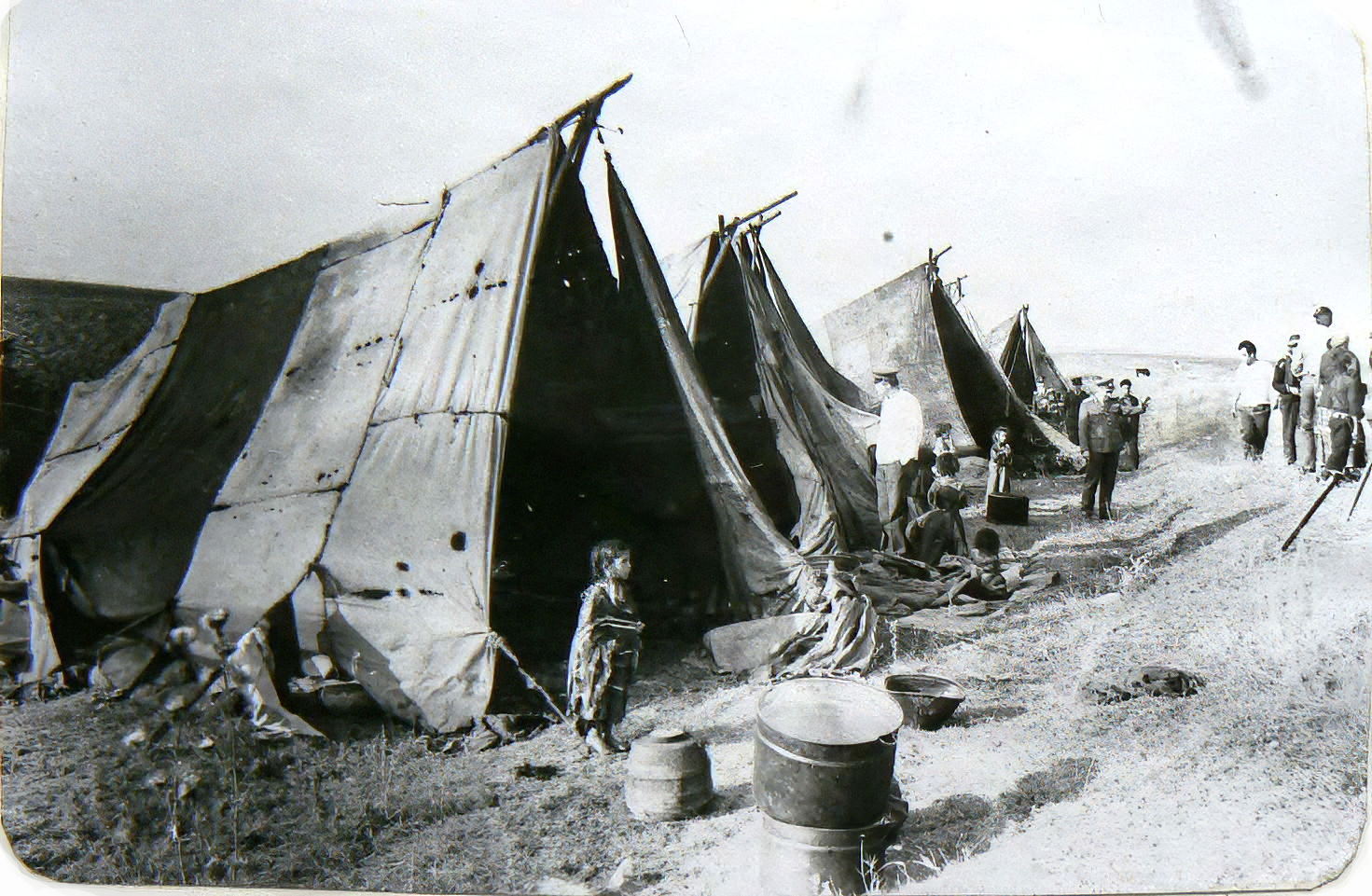
Police raid an encampment of tent-dwelling Roma, 1977. Source: ANIC(2).

Censorship and Erasure

Eastern Bloc states adopted widely divergent policies toward their Roma communities, ranging from recognition to outright erasure. Bulgaria forced Muslim Roma and Turks to adopt Christian or Bulgarian names and banned Romani musical forms like the kyuchek.13 Czechoslovakia went beyond cultural erasure, promoting the sterilization of Romani women in exchange for cash rewards.14 Meanwhile, Yugoslavia took the opposite course, allowing Romani political and cultural life to flourish and even adopting the ethnonym “Roma” in official discourse.15 Hungary, too, granted official recognition in 1984.16

Romania’s undeclared policy fell somewhere in between these extremes: it denied the existence of a Romani minority and criminalized many traditional trades, even as it exploited and celebrated the musical skill of lăutari for the propagandistic aims of Party and Leader. A secret report from November 1977 cites Ceaușescu ordering “vigorous measures … to liquidate the nomadic phenomenon among the Gypsy population,” using the alleged criminality of the Roma to justify accelerated policies of forced sedentarization.17 Echoing the fascist discourse of the 1940s Antonescu regime, the report claims that the “Gypsy population” has a “parasitic conception of life and [a] disregard for the rules of social coexistence” and survives on “theft, robbery, begging, cheating, [and] fortune-telling,” supposedly accounting for an implausible 13% of all crime annually.

As settled Roma whose privileged profession allowed an escape from the draconian employment decree through participation in state folklore ensembles, lăutari were largely unaffected by these policies. Censorship posed a far greater threat: performing the wrong repertoire for the wrong crowd could have real consequences, and songs circulated in private “underground” contexts often carried messages at odds with official narratives and ideology. One prominent example is the song “Bălălău” (Simpleton), first recorded by Marcel Budala in 1970 as simply “Hora lăutărească” whose popular underground lyrics began “Simpleton, mama’s boy / The whores ate up your money / Let them eat my money, mama / For their lips were sweet. / Come, come, simpleton / Stop your drinking, my boy.” A thinly veiled reference to Ceaușescu’s alcoholic son, Nicu, the song became a common request in Romanian taverns of the 1970s. Gicu Petrache recalls:
“Eventually they banned it from being performed at gigs, weddings, everywhere, and I really can’t blame them. Everyone sang it as they liked, and they’d even make references to the leadership, the Party: ‘Simpleton from Scornicești [Ceaușescu’s home village] / Simpleton from Scornicești / If you saw him you’d go mad / He’s got money and a car’… Who was the simpleton from Scornicești? You didn’t have to be a genius to figure it out.”
Other musicians told me of singers hauled off and beaten by the police for performing “Bălălău,” yet its notoriety only fueled its appeal. In response, the authorities promoted “clean” versions in order to neutralize its subversive power. Folklore singer Ion Dolanescu’s 1973 radio performance “Bălălău, băiatul mamii” was one such attempt, and lăutar diva Gabi Luncă went even further with “Pe drumul de la Buzău” (On the road from Buzău) that same year, transforming it into the harmless tale of a cheerful roadside singer. The “Bălălău” melody proved so infectious that it began a circuitous journey across Europe, spawning cover after cover before looping back to Romania. It first resurfaced in Yugoslavia as Darko Domijan’s “Zingarella” (Gypsy Girl, 1982), then in Bulgaria as Stefka Berova and Iordan Marchinkov’s “Магдалена” (Magdalena, 1984), and later in France, where Enrico Macias recorded his own “Zingarella” (1988), in turn inspiring Romanian pop singer Alexandru Jula’s down-tempo ballad “Mi-ai adus iar primăvara” (You Brought Spring Back to Me, 1986).
“A disc is born” – Photo reportage by S. Steiner (Flacăra, April-June 1956)
Between corruption and censorship, making records presented far more obstacles than performing live, which is why some of the greatest lăutar singers of the 20th century—including Ion Nămol, Florică Roșioru, Laleaua Neagră, Costel Hanțu, and Gicu Petrache—did not record in the communist period. Costel Vasilescu told me that “Electrecord [the state record label] was a business that… did whatever it wanted—I think they received a lot of bribes, and only those who paid bribes could make albums,” adding that Romica Puceanu was exempt because “her records sold like hot cakes”.

The rampant corruption at Electrecord was no secret to the Securitate, whose files contain numerous reports of editors demanding bribes in return for recording contracts. One 1985 file recounts how artists from the Rapsodia Română orchestra sent a letter to Radio Free Europe in Munich—addressed to Ceaușescu himself—alleging that Electrecord’s folklore editor, Stela Nachi, had withheld their records’ publication because they had not paid her a bribe. The fact that these artists wrote to a foreign radio station knowing that the Securitate would intercept their message suggests that they were afraid to go to Nachi’s superiors, who were likely in on the scheme. Agents tasked with investigating the editor found that she “exhibits a luxurious lifestyle that her salary does not permit,” noting her “very expensive clothing of foreign origin” and “gold jewelry that is not produced in our country.”18 Despite this and other reports, Nachi kept her job, suggesting protection from higher up.

Signing with Electrecord was only the first step in an arcane approval process in which every song lyric was scrutinized. Singers submitted a repertoire list and then performed it before a censorship committee. “If they heard three or four words that they didn’t like, [the censors] would spot them right away and say, ‘Stop! We’re cancelling that song, don’t sing it,’” Gicu Petrache recalled. What began as a ban on references to crime, prison, or capitalist decadence expanded under Ceaușescu, and by the mid-1980s—amid shortages and energy rationing—the list of forbidden words grew to include “dark,” “cold,” “hunger,” “death,” “fear,” and even “oranges,” “bananas,” and “coffee,” then unaffordable luxuries.19

References to Romani identity were censored as well, along with musical features like the limping sașe-a-opta rhythm that only regime-favored stars could get away with. “I never heard them say that a melody was ‘too Gypsy’… but it happened to other guys, who had songs cut from their lists,” Costel Vasilescu recalled. One such case was cimbalom player Nicolae Feraru, whose proposed repertoire for his 1983 solo LP was rejected for having too much “Gypsy flavor.” When censors cut his Moșule te-aș întreba!, he improvised a clever workaround: “I said, ‘No problem, I’ll play a sîrba.’ And which sîrbă did I play? Moșule te-aș întreba! [retitled Sîrba de la Corbii Mari]. And they absolutely didn’t notice, so that’s how I got away with it. As a lăutar you could always find a ‘little door.’” Ultimately, racial discrimination—including being told he was “too dark-skinned for TV”—became a decisive factor in Feraru’s decision to defect to the United States.

Lăutari in the Securitate Archives

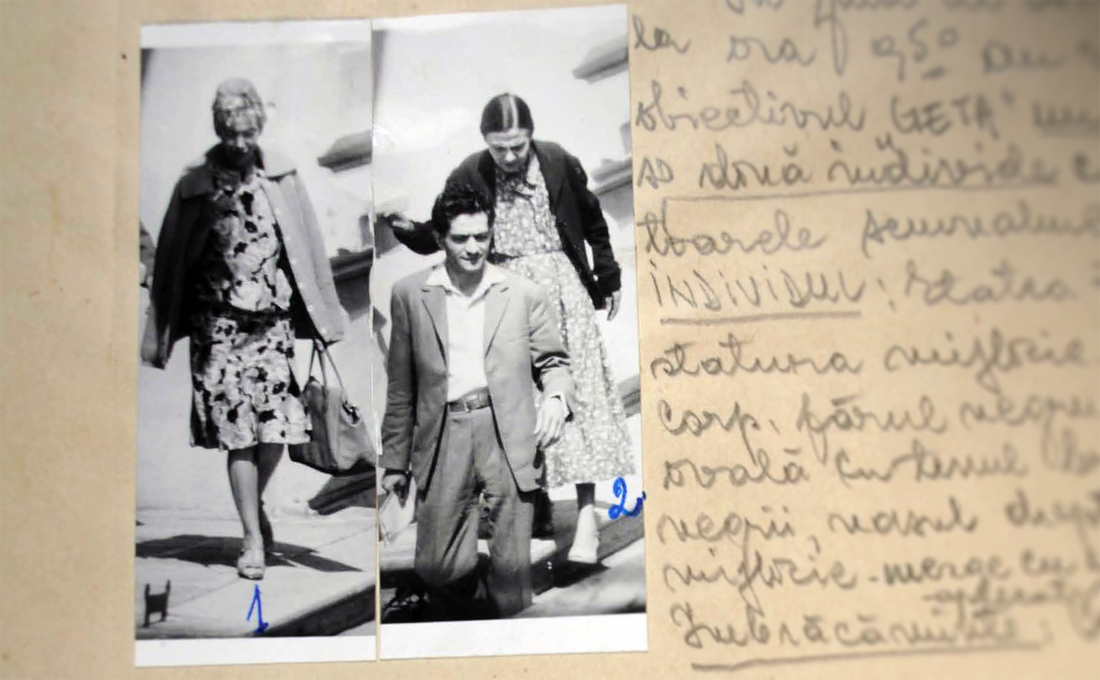
With over two million files comprising the activities of individuals and state enterprises, the Securitate archives20 present only a partial picture of the system of control and surveillance that lăutari had to navigate to make a living. It seems that only musicians with ties to foreign or “hostile elements” were actively investigated. For example, lăutar power couple Gabi Luncă and Ion Onoriu aroused suspicion due to their involvement with the American-funded evangelical church, while Romani jazz bassist Johnny Răducanu was investigated beginning in the 1950s for his friendships with French and American diplomats, his “decadent music” and “cosmopolitan, and hostile attitude”.21 Răducanu was ultimately recruited as a Securitate informant in 1978 to spy on American diplomats—presumably in exchange for increased opportunities.22 Meanwhile, the file of celebrated singer-accordionist Fărâmiță Lambru reveals a persistent racist ideology among the secret police: suspected of conspiring with Greek diplomats in 1964, Lambru—already suffering from tuberculosis—is characterized as a “Gypsy” with “poor intellectual possibilities, poorly educated, with a weak vocabulary.”23
Fărâmița Lambru with his wife and mother-in-law, photographed by a Securitate agent, August 1964.
Perhaps more surprising than the archive’s contents are its silences, with many files destroyed or missing. Thus, while the Securitate devoted ample attention to the problem of fugari (defectors) from among the ranks of ARIA artists, several well-known defectors including Nicolae Feraru are absent from the archive’s pages. Even cimbalom legend Toni Iordache, whose 1975 imprisonment remains the subject of enduring rumor, appears only in passing. Iordache, as it turns out, was arrested upon returning from a tour in Japan not for smuggling cocaine in the legs of his cimbalom, as popular lore claims, but for allegedly selling items brought from abroad and keeping foreign currency at his home. It is difficult to imagine a star of his stature being punished for such a minor offense unless the authorities sought to make an example of him. Iordache’s son Leonard recalls:
“Everyone did it, you’d sell anything [from abroad] to survive: coffee, whiskey, video cassettes, clothes. That’s why we went on tour! They confiscated everything, and [Toni] was sentenced to three years and three months, and ended up serving a year and three months. That’s when he got sick with diabetes. He weighed 90 kilos when he went to jail and he came out weighing just 49. When I saw him, I couldn’t believe it was him. I was 14 years old.”
As life in Romania worsened under Ceaușescu, the artistic freedom and economic prospects of the West were tempting enough to risk abandoning one’s career and loved ones in Romania. Fear of reprisals against family members kept many from attempting it: spouses of defectors were often barred from work or placed under house arrest, while friends and colleagues faced heightened surveillance. By the 1980s, defection had become a major concern. A top-secret 1983 report on freelance artists—including dancers, musicians, and lăutari—found that at least 79 artists had defected while on tour in the previous year. The report also alleges that Romanian artists were to blame for selling contraband goods, including “cassettes or magnetic tapes with decadent music.”24

Conclusion

What emerges from this history is not simply a chronology of restrictions but a portrait of resilience and adaptability. Despite the cruelty and corruption of Ceaușescu’s dictatorship, lăutari cultivated a musical world that state ideology could never fully penetrate. In the end, the state failed to co-opt the deeper meanings of lăutarie. The regime collapsed, but the music endured—reshaped, electrified, and still deeply tied to Romani community life.

The archival traces left behind remind us that cultural control was always incomplete, and that lăutari, despite immense pressure, retained agency as creators and interpreters of their world. Their memories of the era, often tinged with nostalgia, tell us less about communism’s virtues than about the stability and prestige their profession once offered. By accounting for both the limits imposed on them and the agency they exercised, we gain a clearer understanding not only of lăutari under socialism, but of the historical patterns of exploitation and resistance that continue to shape Romani culture in Romania today.

  1. Oprea 2006.↩︎
  2. Petcuț 2016:10; Achim 2004:102.↩︎
  3. Woodcock 2005, Popa 2021.↩︎
  4. Petrescu 2009:410; Verdery 1995:104.↩︎
  5. Achim 2007:173.↩︎
  6. Buchanan 2006; Silverman 1983; Rice 1994.↩︎
  7. Drăgoi 1954:7.↩︎
  8. Mengel 2018:447.↩︎
  9. See Dorson 1950; Giuchescu 2001:117.↩︎
  10. Verdery 1995:36-38.↩︎
  11. Rădulescu 1996:135.↩︎
  12. Petrescu 1998:24; Verdery 1995:107.↩︎
  13. Silverman 1989:144; Rice 2004:72; Kirilov 2010:115.↩︎
  14. Pogány 2004:55.↩︎
  15. Zahova 2018:26–27.↩︎
  16. Pogány 2004:55.↩︎
  17. ACNSAS, Fond Documentar, File 11201/D144, Vol. 15, Document 1-11.↩︎
  18. Source: ACNSAS, Fond Documentar, File 10784, Vol. 9, Document 51.↩︎
  19. Deletant 2018:388–390; Tismăneanu 2006:504.↩︎
  20. Now administered by the National Council for the Study of the Securitate Archives (CNSAS), founded in 1999.↩︎
  21. Source: ACNSAS, Fond Informativ, File 256890, Vol. 2, Document 6.↩︎
  22. Source: ACNSAS, Fond Informativ, File 256890, Vol. 2, Document 42.↩︎
  23. Source: ACNSAS, Fond Informativ, File 427330, Document 4-6.↩︎
  24. Source: ACNSAS, Fond Documentar, File 13147, Vol. 17, Document 45-50.↩︎

    *I would like to thank Mihai Burcea, Vasile Ionescu, and Manuela Marin for their generous assistance with sources for this article, and Marius-Georgian Bobleagă for help with fact-checking and editing. This research was greatly enriched by interviews with the following musicians, some of whom are sadly no longer with us: Nicolae Feraru, Leonard Iordache, Marian Mirea, Costel Nechita, Gicu “Chitaristu” Petrache (1954-2021), and Costel “Trompetistu” Vasilescu (1940-2022).

    Further Reading:


  1. Achim, Viorel. 2004. The Roma in Romanian History. Budapest & New York: Central European University Press. [First published in 1998 as Țiganii în istoria României, Bucharest: Enciclopedică.]
  2. Achim, Viorel. 2007. “Gypsy Research and Gypsy Policy in Romania, 1920-1950.” In Erziehung und Vernichtung. Zigeunerpolitik und Zigeunerforschung im Europa des 20. Jahrhunderts, edited by Michael Zimmermann. Stuttgart: Franz Steiner Verlag, 157-174.
  3. ANIC. Fototeca online a comunismului românesc. Fond ISISP, Nicolae Ceauşescu 01.1980, K046, K048.
  4. ANIC. Photographs from 1977 study. Fond CC al PCR-Secția Organizatorică, Dosar 23/1977.
  5. Buchanan, Donna A. 2006. Performing Democracy: Bulgarian Music and Musicians in Transition. Chicago: University of Chicago Press.
  6. CNSAS. 2019. Raport de activitate 2019.
  7. Deletant, Dennis. 2018. Romania Under Communism : Paradox and Degeneration. Abingdon, Oxon: Routledge.
  8. Dorson, Richard M. 1976. Folklore and Fakelore: Essays Toward a Discipline of Folk Studies. Cambridge, Mass.: Harvard University Press.
  9. Drăgoi, Sabin V. 1954. “Cinci ani de activitate a Institutului de Folclor: O sărbătoare a folcloriştilor noştri.” Muzica 5 (6): 5–9.
  10. Giurchescu, Anca. 2001. “The Power of Dance and Its Social and Political Uses” in Yearbook for Traditional Music, Vol. 33 (2001), 109-121. Cambridge: Cambridge University Press.
  11. IICCMER (Tismăneanu, et al). 2006. Raport Final: Comisia Prezidenţială Pentru Analiza Dictaturii Comuniste Din România. Bucureşti.
  12. Kirilov, Kalin S. 2010. “Revival of Bulgarian Folk Music During Socialism and the Post-Socialist Transition: Music and Cultural Identity”. MUSICultures 37 (February).
  13. Marin, Manuela (Ed.). 2017. Romii şi regimul comunist din România. Marginalizare, integrare şi opoziţie, vol. I-II. Cluj-Napoca: Editura Mega.
  14. Mengel, Maurice. 2018. “New Folk Music as Attempted Repatriation in Romania.” In The Oxford Handbook of Musical Repatriation, edited by Frank Gunderson, Robert C. Lancefield, and Bret Woods. New York: Oxford University Press.
  15. Oprea, Marius. 2006. “O privire în interiorul aparatului de Securitate,” Anuarul IICCR, Vol. 1, p. 83-108.
  16. Petcuț, Petre. 2016. Rromii: sclavie și libertate: construirea și emanciparea unei noi categorii etnice și sociale la nord de Dunăre, 1370–1974. Bucharest: Editura Centrului Național de Cultură a Romilor.
  17. Petrescu, Dragoș. 1998. “400.000 De Spirite Creatoare: ‘Cîntarea României’ Sau Stalinismul Național în Festival.” In Miturile Comunismului Românesc, Vol. 1., edited by Lucian Boia. Bucharest: Nemira.
  18. Petrescu, Dragoș. 2009. “Community-Building and Identity Politics in Gheorghiu-Dej’s Romania, 1956–64.” In Stalinism Revisited: The Establishment of Communist Regimes in East Central Europe, edited by Vladimir Tismăneanu, 401-422. Budapest; New York: Central
  19. Pogány, István. 2004. The Roma Cafe: Human Rights and the Plight of the Romani People. London: Pluto Press.
  20. Popa, Bogdan. 2021. “Ethnicity as a category of imperial racialization: What do race and empire studies offer to Romanian studies?” Ethnicities, 21(4), 751-768.
  21. Rădulescu, Speranța. 1996. “Gypsy Music versus the Music of Others.” Martor 1:134-145.
  22. Rice, Timothy. 1994. May It Fill Your Soul: Experiencing Bulgarian Music. Chicago: University of Chicago Press.
  23. Rice, Timothy. 2004. Music in Bulgaria: Experiencing Music, Expressing Culture. New York: Oxford University Press.
  24. SF (Schweizer Fernsehen). 1990. Die letzte Jagd. Documentary film directed by Andreas Hoessli und Sabine Gisiger.
  25. Silverman, Carol. 1983. “The Politics of Folklore in Bulgaria.” Anthropological Quarterly 56 (2): 55–61.
  26. Silverman, Carol. 1989. “Reconstructing Folklore: Media and Cultural Policy in Eastern Europe.” Communication 11: 141-160.
  27. Verdery, Katherine. 1995 [1991]. National Ideology Under Socialism: Identity and Cultural Politics In Ceauşescu's Romania. [Pbk. ed.]. Berkeley, Calif.: University of California Press.
  28. Woodcock, Shannon. 2005. ‘The Țigan is not a man’: The Țigan Other as catalyst for Romanian ethnonational identity. Ph.D. dissertation, University of Sydney.
  29. Zahova, Sofiya. 2018. “Romani Writers and the Legacies of Yugoslavia.” Baltic Worlds, 11 (2-3), 25–33.


*This article is part of the project The Sonic Turn, co-financed by AFCN. The project does not necessarily represent the position of the Administration of the National Cultural Fund. AFCN is not responsible for the content of the project or the way its results may be used. These are entirely the responsibility of the funding beneficiary.
About the Author

Shaun Williams

Shaun Williams is an ethnomusicologist and musician based in Bucharest. Drawing on over a decade of ethnographic research in Eastern Europe, his work is focused on minority rights and traditional music under state socialism and post-socialist transition.

Share this Article
Next Article
POLITICS OF IDENTITY

Political Legitimacy, National Identities, and Cultural Pursuits in The Song...

Established in 1976 and lasting until 1989, this festival appeared in the immediate aftermath of the Romanian communist regime’s inclusion of nationalistic elements into its official socialist ideology.

Claudiu Oancea
More Articles
SONIC HISTORIES

A Century of Manele: a Sonic Excavation of Romania’s Most Popular Genre

An exploration into the history of the Romanian-Romani ethno-pop music genre manele.

Shaun Williams
FROM THE ARCHIVES

None of Us Know the Words: Lessons from the Mid-20th Century Monocultural...

Contesting the vitality of a multicultural, multi-ethnic America, this article offers a glimpse into the Mid-Twentieth Century American music.

Ian Nagoski
SONIC ACTIVISM

How to Perform an Anti-fascist Collective From Sound

This essay examines the idea of the collective and collaboration in relation to, and in resistance against, fascism and populism.

Salomé Voegelin