To Hear and to Listen: On Sounds of Passing Worlds Letea, Tulcea County, 2025. Photo credits: Alex Iorga

To Hear and to Listen: On Sounds of Passing Worlds

January 4, 202610-12 minutes read

Written by:

Alexandru Iorga

Share article:

Introduction

“Truth is a matter of the imagination. The soundest fact may fail or prevail in the style of its telling: like that singular organic jewel of our seas, which grows brighter as one woman wears it and, worn by another, dulls and goes to dust. Facts are no more solid, coherent, round, and real than pearls are.” Ursula K. LeGuin - The Left Hand of Darkness
Ursula K. LeGuin`s book advocates that the perception of truth heavily depends on the narrative and how it's presented, much like a jewel's brilliance can change depending on the wearer. May we compare truth with sound? Or the other way round? What does it mean to hear and to listen in a world where sounds are taken for granted, or even ignored thus causing their disappearance?
Studying hearing and listening is a matter of craftsmanship, not only orality, and it demands multi-modal ethnography integrating textual, oral, and even digital artifacts.
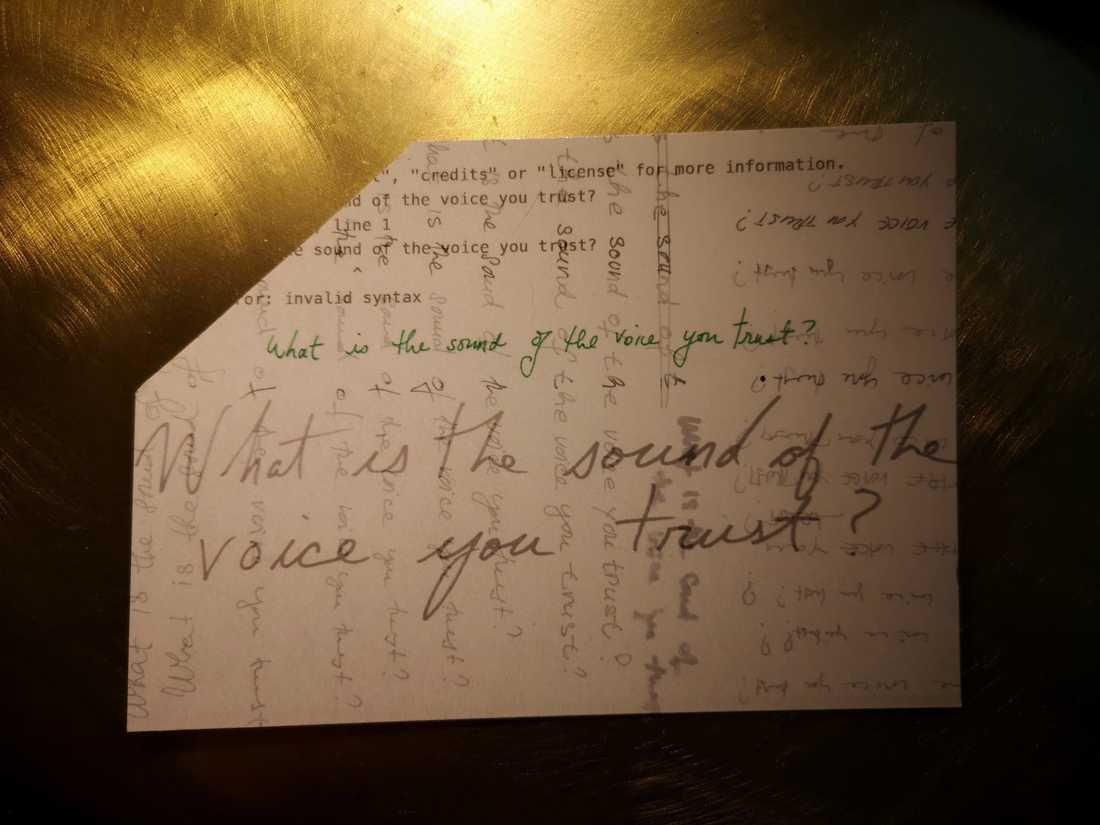
TONSPUR_collaboration: Yvette Janine Jackson / Bojana S. Knežević / Katarina Petrović / Karen Werner.
Humans' need and desire to be heard and listened to are of a great importance being a part of the self-construction process and the social construction of reality itself. Yet, what is happening when and what drives humans trying to communicate outside this planet? Is it a matter of becoming aware of the moment ”when the Earth screamed” (Guattari 2000) or that our time on this cosmic spaceship has ended? Or maybe something else.

Anyhow, in 1977, NASA placed two gold-plated copper phonograph records, known as the Voyager Golden Record, to be sent to space on Voyager 1, respectively, Voyager 2 spacecraft. The aim was to send a message through which to tell the story of our planet across interstellar space for any intelligent extra-terrestrial life. The discs contain sounds, images, and greetings from Earth, were designed by a committee led by Carl Sagan and are based on his very principle that “the nature of life on Earth and the search for life elsewhere are two sides of the same question – the search for who we are”.

By pleading for building future oriented sound archives, this paper explores the distinction between hearing as a physiological act and listening as an intentional, interpretive process (Huvenne, 2022; Nancy, 2007; Mendes-Flohr, 2024). Listening is not neutral, it is cultural, social, and political. It shapes identities, mediates relationships, and produces knowledge. Yet, the sonic environments that sustain these practices are increasingly fragile. Sometimes, ecological changes and technological homogenization threaten the diversity of sounds that once defined life, environments and so on.

Sketching from an anthropological perspective, I examine some theories of hearing and listening, the problem of disappearing sounds, and the role of sound archives in preserving sonic heritage. I argue for an ethics of listening—one that treats sounds as vital components of cultural and ecological systems, deserving protection akin to biodiversity. In doing so, I align with the “reflective aural turn” (Samuels et al., 2010), which foregrounds listening as an epistemological and political act. My goal in this paper is to invite readers to listen not only to sounds but to the world’s ephemerality. Sound`s ephemerality itself acts as a trigger for reflection on the interplay of ”personhood, aesthetics, history, and ideology” (Samuels et al., 2010).
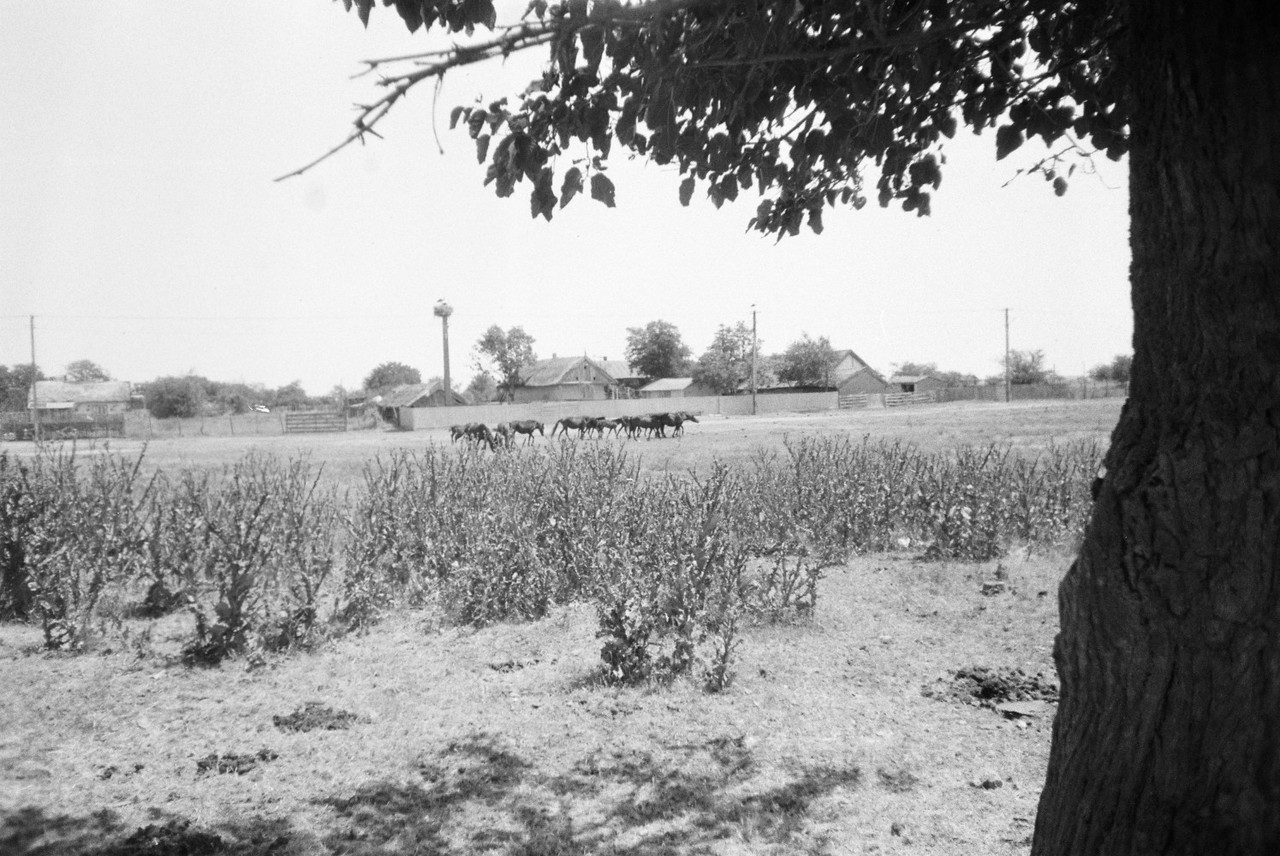
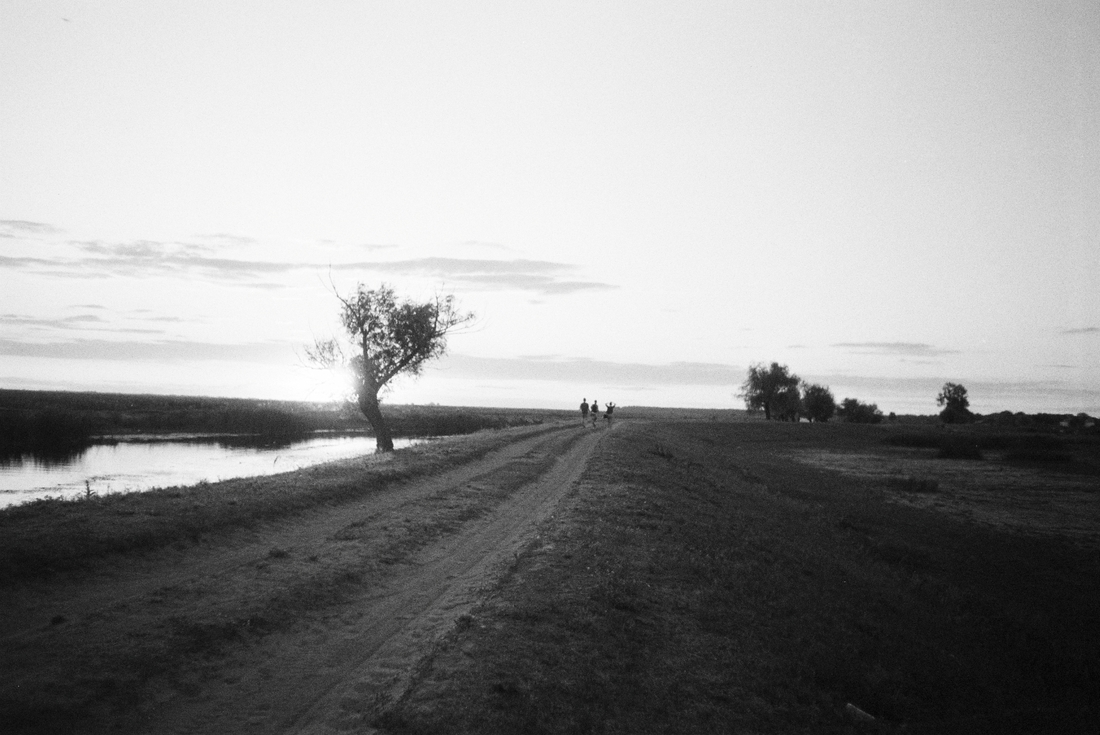
Letea, Tulcea County, 2025. Photo by the author.

On Listening: Dialogical Ethics and Silent Voices

In his provocative book, The Audible Past: Cultural Origins of Sound Reproduction, Jonathan Sterne wrote that René-Théophile-Hyacinthe “Laennec, who is credited with inventing the stethoscope, published A Treatise on the Diseases of the Chest and on Mediate Auscultation in 1819 […]. Mediate auscultation is the act of listening to a patient’s body through a stethoscope. Laennec’s lengthy Treatise is a fascinating document because it explains to physicians why they would want to listen to patients’ bodies, how to listen to patients with the stethoscope properly, and how to interpret the sounds thus heard.

This level of explanatory detail was necessary at the time: although physical examination would become the dominant mode of examination in the 1800s, it was still an emergent practice in 1819 […]” (2003: 90). Sterne`s example draws on how listening practices are historically and culturally constructed. Sterne uses Laennec’s invention of the stethoscope to illustrate that listening, even in medicine, is not natural, not just physiological but requires training, interpretation, and, sometimes, institutional legitimation; it is epistemic and cultural, historically contingent and socially organized.

Franz Boas's concept of "sound-blindness" (or "alternating sounds") describes the inability to perceive subtle phonetic differences and sounds in and from foreign languages, similar to how colour-blindness affects colour perception. Boas's argument is that this phenomenon is rooted in cultural/ linguistic perception, not just biology. He used this idea in his 1889 work, "On Alternating Sounds", to show that listeners categorize sounds according to their own language's system, revealing how cultural context shapes perception and challenging ideas of linguistic superiority. Boas conclude his paper as following: “it seems to me a sufficient explanation of the phenomena of ‘sound-blindness’, as well as of ‘alternating sounds’, to assume that they originate by ‘alternating apperception’” (1889: 53).

Listening is more than perception. It is an ethical engagement with fragile sonic worlds. Hearing is physiological, but listening is active, conscious, intentional, interpretive, and relational (Huvenne, 2022; Nancy, 2007). Listening involves focused attention, psychological interpretation, and a willingness to be open to what is being happening in the surroundings or to what is communicated. It mediates identities, organizes social life, and produces knowledge (Sterne, 2003; DeNora, 2000). “Sound, as a dynamic movement can be heard or can be felt” (Huvenne, 2022). Yet time, modernization and ecological changes threaten sonic diversity, sometimes erasing acoustic ecologies and oral traditions (Schafer, 1993; Fantinato, 2021) while bringing in new types of sounds that are specific to works related to modernization and development.

This paper situates listening within philosophical phenomenology, sociological critique, and anthropological acoustemology (Feld, 1996, 2020). It argues for a poetics and ethics of listening as care—an imperative in the Anthropocene.
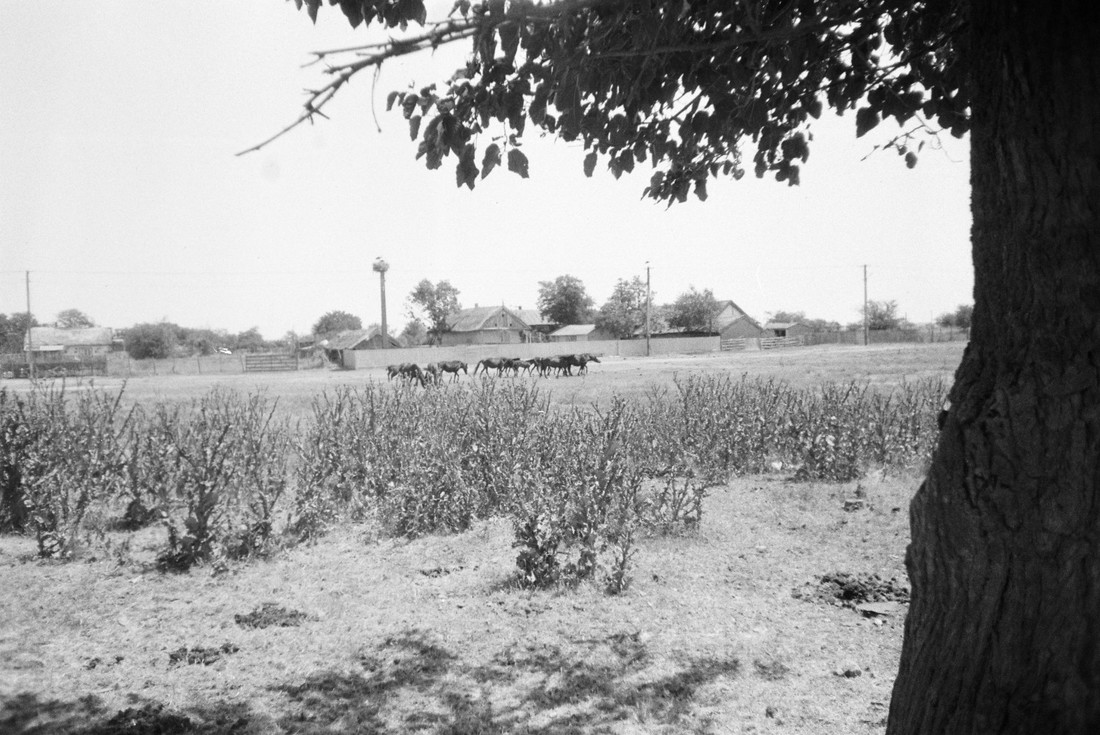
Letea, Tulcea County, 2025. Photo by the author.
During fieldwork research in Moieciu (2018), Brașov County, and Arad and Hunedoara (2023) counties I have noticed something that I already knew but, this time, on the contrary. Besides mountains, these lands consist of hilly areas that are (or used to be) used as pastures, definite landscapes. Humans and their livestock have created and maintained such pastoral landscapes emphasizing the longstanding but fragile ecological relationships. As villages went depopulated and the number of livestock significantly decreased, pastures turned to another state by natural reforestation, thus the landscape changed again.

It`s a truism to say that the same place can have various sounds in various moments or periods of times (and I am not talking about the seasonal variations, only) but, in general terms, what once was will never be the same again. From that point of view, sounds might be looked upon as non-repeatable events tied to unique contexts (people, places, habitats, ecosystems, environments, social situations, etc.). My point here is that the very interaction of humans and more-than-human actors, on the principle formulated by Rachel Carson (Silent Spring, 1962) that „in nature nothing exists alone”, creates the conditions of possibility for existence and disappearance as well.

Listening, as Mendes-Flohr (2024) frames it, is a poetic act, a shift from apodeixis (proof) to deixis (pointing toward recognition). Cavell (2022) calls this acknowledgment not knowledge, but an ethical grammar of interpersonal life. Barthes (1985) adds a hermeneutic dimension, namely that listening unfolds across alerting, deciphering, and understanding, culminating in suspension of judgment. Buber’s (2023) dialogical philosophy radicalizes this stance by pointing out that listening as an I–Thou relation, that is unmediated by conceptual filters, requires vulnerability and openness. His notion of inclusion resists empathy’s projection, thus advocating a non-appropriative participation. Listening seems to engage a non-intentional openness, enhancing relinquishing control.

Although there are stances (such as meditation, or inner closures mediated by steady or portable devices), listening is not merely an individual, inner experience; it can become a form of resistance (for example, by choosing a genre or another and the culture or sub-cultures that defines it/them), a fragile yet radical gesture against domination and muteness. Listening often demands dismantling defensive postures and risking exposure to the “soundless thundering” of alterity.
Tulcea County, 2025. Photo by the author.

The Problem of Disappearing Sounds

Back in the day, way before writing, hearing was considered to have been more vital for humans than the sense of sight.

As stated above, sounds vanish with their contexts. We can talk about disappearing urban soundscapes (from cars to street cries and vendors, from bells and urban symphonies to specific works, loom rhythms, industrial sounds, machine sounds), as well as rural ones (it is not about romantic depictions only but these are good examples), about vanishing ecological sounds (such as species extinction, deforestation) and about the loss of oral traditions and ritual sounds. In Romania, for instance, almost nothing has left from the industrial period in terms of sounds and sound archives. Interestingly enough, while the Romanian forefathers of sociology (H. H. Stahl) and ethnography (I. Chelcea) witnessed at first hand the hasty birth of new villages, we are now not even observing the vanishing of villages and most of the rural world as some of us knew it. But that`s the way things are getting along.

Besides the passing of time, of equal importance are the political and economic actors involved in changing. From that point of view, when we look upon environmental devastation, we can observe that in many cases it silences acoustic ecologies (Fantinato, 2021), while “acoustic colonialism” marginalizes or forbids indigenous sonic practices (Cárcamo-Huechante, 2013).

Schafer (1993) warned of this trend decades ago, framing it as a “crisis of the soundscape” in modernity in terms of modernity’s homogenizing soundscape. Nowadays, sonic extinction parallels biodiversity loss, highlighting not only the sonic fragility but also the fragility of this transforming world. Hence, sonic heritage preservation often entails transformation itself.
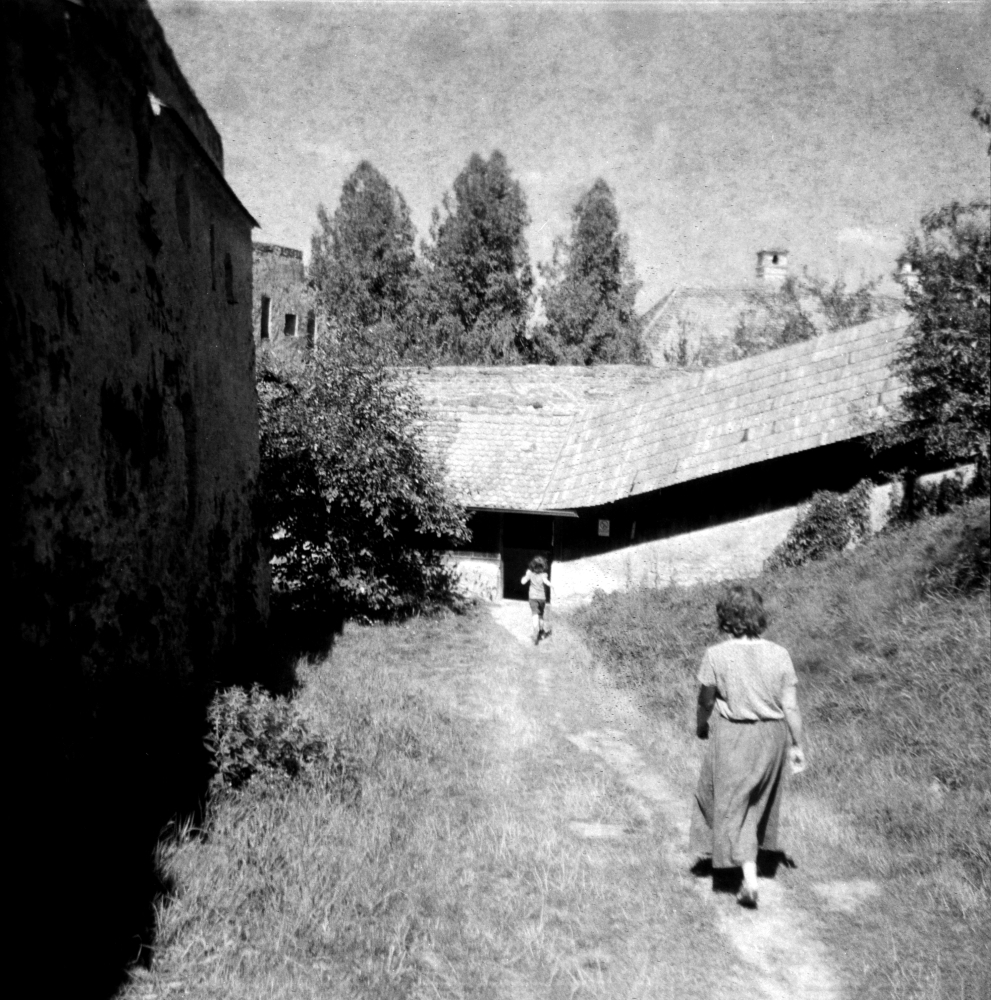
Cisnădioara, Sibiu County, 2023. Photo by the author.
In response to sonic disappearance, sound archives have emerged as repositories of acoustic heritage. These range from institutional collections, such as ethnographic recordings housed in museums or research institutes, to digital platforms enabling community-driven sound mapping. Their purpose is to preserve sounds that would otherwise vanish, safeguarding cultural memory and enabling future research on cultural heritage. Yet archiving sound is fraught with challenges. That might range from technical, ethical to cultural issues. Formats can become obsolete, digital files risk glitches or even decay, human and/or natural provoked disasters may occur (see the shocking example of the National Museum of Brazil in Rio de Janeiro). Decisions about what to preserve and whose sounds matter generally reflect power relations, economic and political dynamics. For instance, Ochoa Gautier (2014) critiques archival practices that privilege certain voices while silencing others, perpetuating colonial hierarchies or marginal positioning (see also Iorga 2019). Nonetheless, archives risk stripping sounds of context, reducing them to isolated artifacts rather than living practices (see also Iorga 2019; Petac; Știucă 2009) entailing their commodification.

Recent scholarship calls for inclusive, participatory approaches. Steingo and Sykes (2019) advocate “remapping sound studies” to incorporate diverse epistemologies and resist homogenization. Community-based projects, such as Indigenous radio (see Cárcamo-Huechante`s article from 2013 depicting Mapuche Use of Radio in Times of Acoustic Colonialism or NIRS - National Indigenous Radio Service), exemplify efforts to reclaim sonic agency. Yet the question remains: can archives capture the vitality of sound, or do they merely freeze echoes of worlds already gone? Of equal importance: do sonic archives create new, self-contained, worlds? Let`s not forget that archives are never innocent (Iorga 2019). Nonetheless, just as physicians learned to interpret bodily sounds, archivists and researchers today must learn to interpret and preserve cultural soundscapes.

From a methodological standpoint, studying hearing and listening is a matter of craftsmanship, not only orality, and it demands multi-modal ethnography integrating textual, oral, and even digital artifacts. Key imperatives might include hermeneutics of silence, such as attending to absences in speech and text (Jaworski, 1997) or emulating Buber’s injunction to “be nothing but an ear”. Also, ethnographic layering, namely combining archival research, participant observation, and digital ethnography might help. Yet the issue of translation and performativity should be taken into consideration as accounting for linguistic hybridity and embodied gestures that resist textual capture.
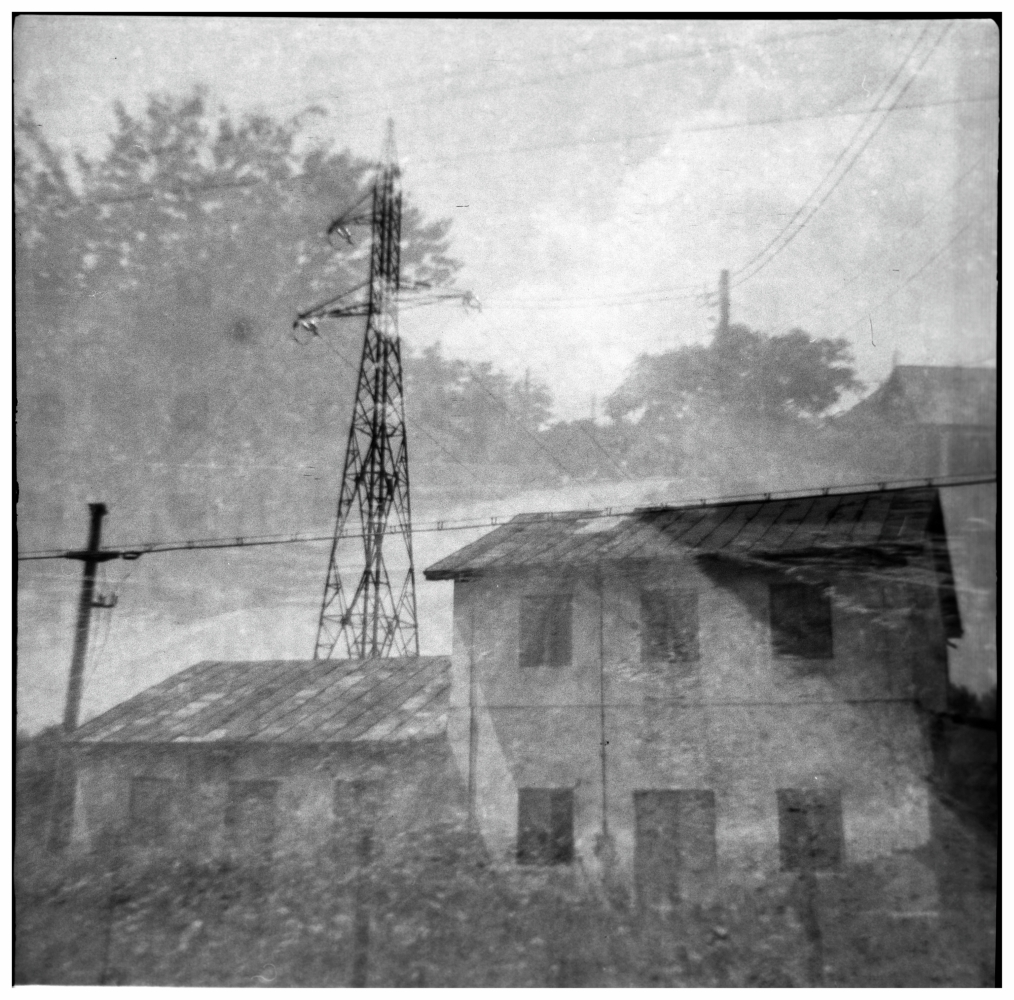
Analogue double exposure on medium format film, Chilia Veche, Tulcea County, 2023. Photo by the author.

Conclusion: Sonic Endangered Landscapes

Listening is more than perception, it is care. Some cultures prioritize silence as a form of listening. Works that employ sound and listening should take them into consideration as means of producing knowledge, space, place and meaning. As sounds vanish, through landscape and infrastructural transformation, ecological collapse, or cultural marginalization, we risk losing not only auditory experiences but entire ways of knowing and being. Yet again, turning back to the beginning of this short essay, can we compare truth with sound? Sounds are inherently ephemeral. Unlike material or even visual artifacts, they exist in time and vanish once produced, making them non-repeatable events tied to specific contexts, be them people, places, environments and social situations. When these contexts disappear, so do their sounds. This disappearance is not merely aesthetic, it signals profound cultural and social transformations.

Sound archives offer partial remedies, yet they cannot fully capture the vitality of lived sonic practices. Preserving sonic diversity requires interdisciplinary collaboration, integrating insights from history, musicology, sociology, anthropology, ecology, and technology. Archives promise continuity, but their rhetoric often privileges hypothetical future use. Such a future-oriented ideal seems to be the goal of each and every archive but there is another end of the archives, namely that they must serve the present, at first. Permanent value is a paradox, because nothing is truly permanent. Instead, archives should enable accountability, applicable knowledge, and cultural connectivity now (Bearman, 1995).

In the Anthropocene, listening becomes a form of care. To listen attentively is to acknowledge the presence, and impending absence, of human and non-human voices, familiar and distant. Protecting sounds as we protect species is not a metaphor but a necessity. For in the resonance of disappearing worlds lies the echo of our shared future.


    Further Reading:


  1. Barthes, R. (1985). Listening. In R. Howard (Ed.), The responsibility of forms (pp. 255–260). University of California Press.
  2. Bearman, David. “Archival Strategies.” The American Archivist 58, no. 4 (1995): 380–413.
  3. Boas, F. (1889). On Alternating Sounds. American Anthropologist, 2(1), 47–54.
  4. Buber, M. (2023). I and Thou. Free Press.
  5. Cárcamo-Huechante, L. E. (2013). Indigenous interference: Mapuche use of radio in times of acoustic colonialism. Latin American Research Review, 48(S), 50–68.
  6. Cavell, S. (2022). Here and There: Sites of Knowledge. Harvard University Press.
  7. DeNora, T. (2000). Music in everyday life. Cambridge University Press.
  8. Fantinato, M. (2021). Resonances of land: Silence, noise, and extractivism in the Brazilian Amazon (Doctoral dissertation). Columbia University.
  9. Feld, S. (1982). Sound and sentiment. University of Pennsylvania Press.
  10. Feld, S. (1996). Waterfalls of song: An acoustemology of place resounding in Bosavi. In S. Feld & K. Basso (Eds.), Senses of place (pp. 91–136). School of American Research Press.
  11. Feld, S. (2020). Alternativas pós-etnomusicológicas: a acustemologia. PROA, 2(10), 193–210.
  12. Huvenne, M. (2022). Phenomenology, an introduction. In The audiovisual chord (pp. 67–84). Palgrave Macmillan.
  13. Iorga, A. (2019). Archives as Ruins: Means of Understanding the Future in an Era of Wrecks. Martor 24: 43-54.
  14. Jaworski, A. (1997). Silence: Interdisciplinary Perspectives. Mouton de Gruyter.
  15. Mendes-Flohr, P. (2024). The Poetics of Listening. Open Philosophy, 7: 20240006.
  16. Nancy, J.-L. (2007). Listening. Fordham University Press.
  17. Ochoa Gautier, A. M. (2014). Aurality: Listening and knowledge in nineteenth-century Colombia. Duke University Press.
  18. Petac, S. PETAC, S.-D. (f.a.). Analiza căluşului în relaţie cu dansurile rituale/ceremoniale masculine europene. Editura: Muzeul Literaturii Române.
  19. Samuels, D., Meintjes, L., Ochoa, A. M., & Porcello, T. (2010). Soundscapes: Toward a sounded anthropology. Annual Review of Anthropology, 39, 329–345.
  20. Schafer, R. M. (1993). The soundscape: Our sonic environment and the tuning of the world. Destiny Books.
  21. Sterne, J. (2003). The audible past. Duke University Press.
  22. Steingo, G., & Sykes, J. (2019). Remapping Sound Studies. Duke University Press.
  23. Ştiucă, N. A. (ed.) (2009). Căluşul. Emblemă identitară. Ed. Universității din Bucureşti.

*This article is part of the project The Sonic Turn, co-financed by AFCN. The project does not necessarily represent the position of the Administration of the National Cultural Fund. AFCN is not responsible for the content of the project or the way its results may be used. These are entirely the responsibility of the funding beneficiary.
About the Author

Alexandru Iorga

Alexandru Iorga holds a PhD in Sociology, with a thesis on the Danube Delta. He currently works at Constantin Brăiloiu Institute of Ethnography and Folklore, with the Romanian Academy. He is Associate Lecturer at the Faculty of Sociology and Social Work, University of Bucharest, Sociology Department, where he teaches courses (BA and MA level) on classic and political anthropology, anthropology of conservation, development and tourism, intimacy, relationships, and friendship.

Academia.edu
Share this Article
Next Article
SONIC TRIGGERS

Sounds of Desire: Slot Machines and the Dopamine Trap

Sounds of desire are not merely cultural artifacts, but potent neurobiological stimuli interacting with profound predictive and affective systems.

Dragoș Rusu
More Articles
SONIC HISTORIES

Romani Music in Communist Romania: Propaganda, Control, and Resistance

Over four decades of communist rule in Romania, Romani professional musicians known as lăutari lived a paradoxical existence.

Shaun Williams
LANGUAGE OF THINGS

Sonic Eschatologies: Liminal qualities of compos(t)ing culture/community...

As it is obviously impossible to stop questioning the sonic implication of the end, we might take a dive right into the limit, right into the membrane of perception.

Stefan Fraunberger
THE SOUND OBJECT

The Politics of Adhān Aesthetics

An exploration into how the adhān (Islamic calls to prayer) operates as a political sound object, emphasizing sound production, spatial dissemination, and socio-political control.

Mohamad Zatari