The Attic presents The Sonic Turn — International Conference · Nov 14–15, 2025
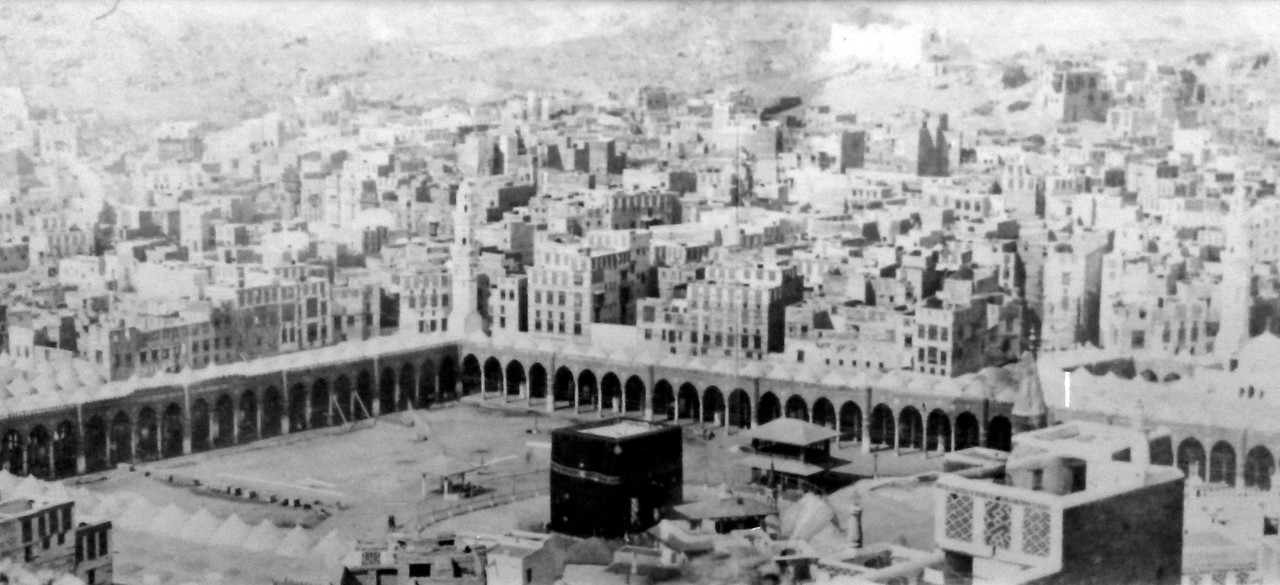
The Politics of Adhān Aesthetics In 1889, a view of the Kaaba inside the Masjid al-Haram, in Mecca. Photo credits: Library of Congress.

The Politics of Adhān Aesthetics

2 days ago14-16 minutes read

Written by:

Mohamad Zatari

Edited by:

Dragoș Rusu

Share article:
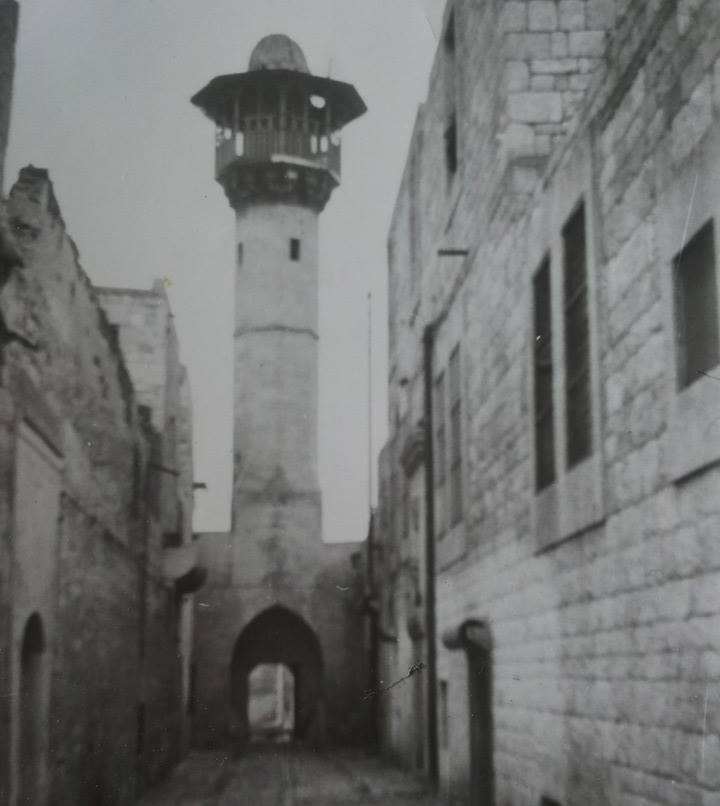
One of my clearest childhood memories is from Aleppo. I used to sleep over at my grandparents’ house in the old city of Aleppo, in the Bab al-Hadid district, Al-Bakraji Old Quarter. It was an area with no access for cars—simply because of the narrow alleys. I remember the landscape so vividly: the rooftops, the pigeons, and the adhan. The soundscape was incredibly clear, with almost no noise pollution at all. The muezzin there was a really good “musician,” in a sense, and his voice is still in my mind to this day. It remains one of the safest, warmest memories I have ever had.

My grandparents’ house was almost part of the mosque’s property—the mosque body, the courtyard, then their house—so everything felt very close, very present. Later, during the war, the house suffered heavy damage from the Assad forces’ bombardment. Much of the old city, and the whole eastern part, was on the ground.
Whenever you hear the adhan after some time away, it stirs feelings of nostalgia, a connection to a soundscape that has shaped daily life and memory. Even if you don’t want to hear it, its absence creates an auditory void.

Introduction: The Adhān as Sonic and Social Marker

Al-Bakraji Mosque (Aleppo). Photo credits: Ghassan Zatary
The adhān (Islamic call to prayer) functions as both a religious ritual and a socially significant auditory signal. It is typically broadcast five times a day to organize communal life, demarcate sacred time, and signify membership in the Muslim community.

Beyond its devotional purpose, the adhān operates as a political and acoustic phenomenon: it asserts the presence of a specific community in public space, marks community boundaries, and negotiates access to audibility in urban soundscapes.

This article draws on different Muslim communities around the world and their habits related to adhān, combining historical sources with an ethnographic fieldwork based in Romania, to explore how the adhān operates as a political sound object.

The analysis emphasizes sound production, spatial dissemination, and socio-political control, addressing questions such as: Who is permitted to produce the call? In which spaces is it broadcast? How do local and diasporic communities shape its musical and social forms?
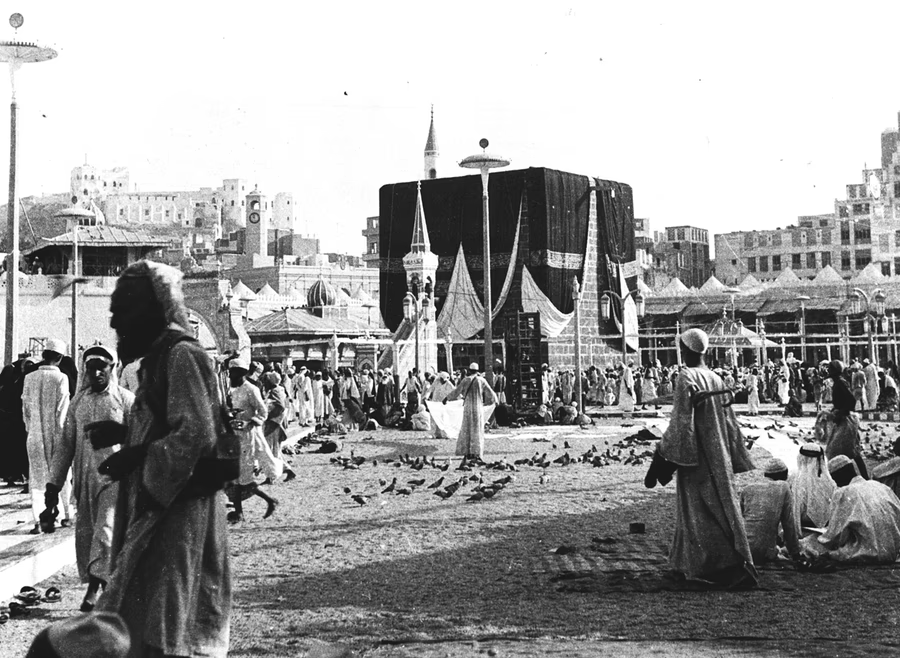
On September 7, 1954, Muslims visit the Kaaba, during a pilgrimage to Mecca. Photo credits: AP Photo

Historical Origins of the Adhān

In mainstream Sunni Islamic historiography, the most widely accepted account attributes the origin of the Adhān to a dream experienced by ʿAbdullāh ibn Zayd. He reported the dream to the Prophet Muhammad, who affirmed its validity and instructed that its words be used as the call to prayer. The task was then given to Bilal ibn Rabah, chosen for his strong and resonant voice.

Other early traditions also circulated — including reports of ʿUmar ibn al-Khaṭṭāb having a similar dream, accounts of angelic instruction, or instances of direct divine inspiration. Though varied, these narratives share a common purpose: to emphasize the sacred legitimacy of the Adhān and highlight its role in defining a distinct Muslim communal identity.

Before settling on the Adhān, several proposals were explored for signalling prayer times, such as raising a flag, blowing a horn, or ringing a bell. The Prophet rejected these options, and the community’s search for a unique auditory marker continued. It is clear that early Muslims deliberately sought a sonic identity that differentiated their worship from that of surrounding religious traditions.

Following the dream, the Prophet instructed ʿAbdullāh ibn Zayd to teach its words to Bilal ibn Rabah so that he could proclaim them publicly. Bilal’s powerful voice made him the ideal choice, and around 622–623 CE he became the first muezzin in Islam. His appointment held profound symbolic weight: a Black man of Abyssinian origin, formerly enslaved, was elevated to one of the most audible and honoured religious roles, signalling the new community’s commitment to moral and spiritual equality before God.

In Shia Islamic tradition, the origin of the Adhān is understood differently. Shia sources hold that the Prophet Muhammad instituted the call to prayer directly by God’s command. In this view, no one other than the Prophet had any authority in determining its wording or form.

The adhan (call to prayer) is the way Muslims are called to prayer. Usually, it is five times a day; sometimes, in some areas, there are additions to the adhan itself. Although slightly varying among Islamic traditions, its core structure remains similar.
It begins with the proclamation: Allāhu akbar (ٱللّٰهُ أَكْبَر) – God is greater, repeated two or four times.
Followed by: Ashhadu an lā ilāha illā llāhu (أَشْهَدُ أَن لَّا إِلٰهَ إِلَّا ٱللّٰهُ) – I testify there is nothing worthy of worship except God, recited two or four times.
Then: Ashhadu anna muḥammadan rasūlu llāh (أَشْهَدُ أَنَّ مُحَمَّدًا رَسُولُ ٱللّٰه) – I testify Muhammad is the messenger of God, recited twice or four times depending on the tradition.
In the Shia (Imami and Zaydi) versions, the phrase Ashhadu anna ʿaliyyan waliyyu llāhi (أَشْهَدُ أَنَّ عَلِيًّا وَلِيُّ ٱللّٰهِ) – I testify Ali is the vicegerent of God is added, usually recommended and recited twice.
This is followed by the calls: Ḥayya ʿala ṣ-ṣalāh (حَيَّ عَلَى ٱلصَّلَاةِ) – Come to prayer, and Ḥayya ʿala l-falāḥ (حَيَّ عَلَى ٱلْفَلَاحِ) – Come to success, each repeated twice.
In Shia versions, one additional line appears: Ḥayya ʿalā khayri l-ʿamal (حَيَّ عَلَىٰ خَيْرِ ٱلْعَمَلِ) – Come to the best of deeds, repeated twice.
During the dawn (Fajr) prayer only, the phrase Aṣ-ṣalātu khayrun mina n-nawmi (ٱلصَّلَاةُ خَيْرٌ مِنَ ٱلنَّوْمِ) – Prayer is better than sleep is included, recited twice.
The call concludes with: Allāhu akbaru (ٱللّٰهُ أَكْبَرُ) – God is greater, and Lā ilāha illā llāhu (لَا إِلٰهَ إِلَّا ٱللّٰهُ) – There is nothing worthy of worship except God.
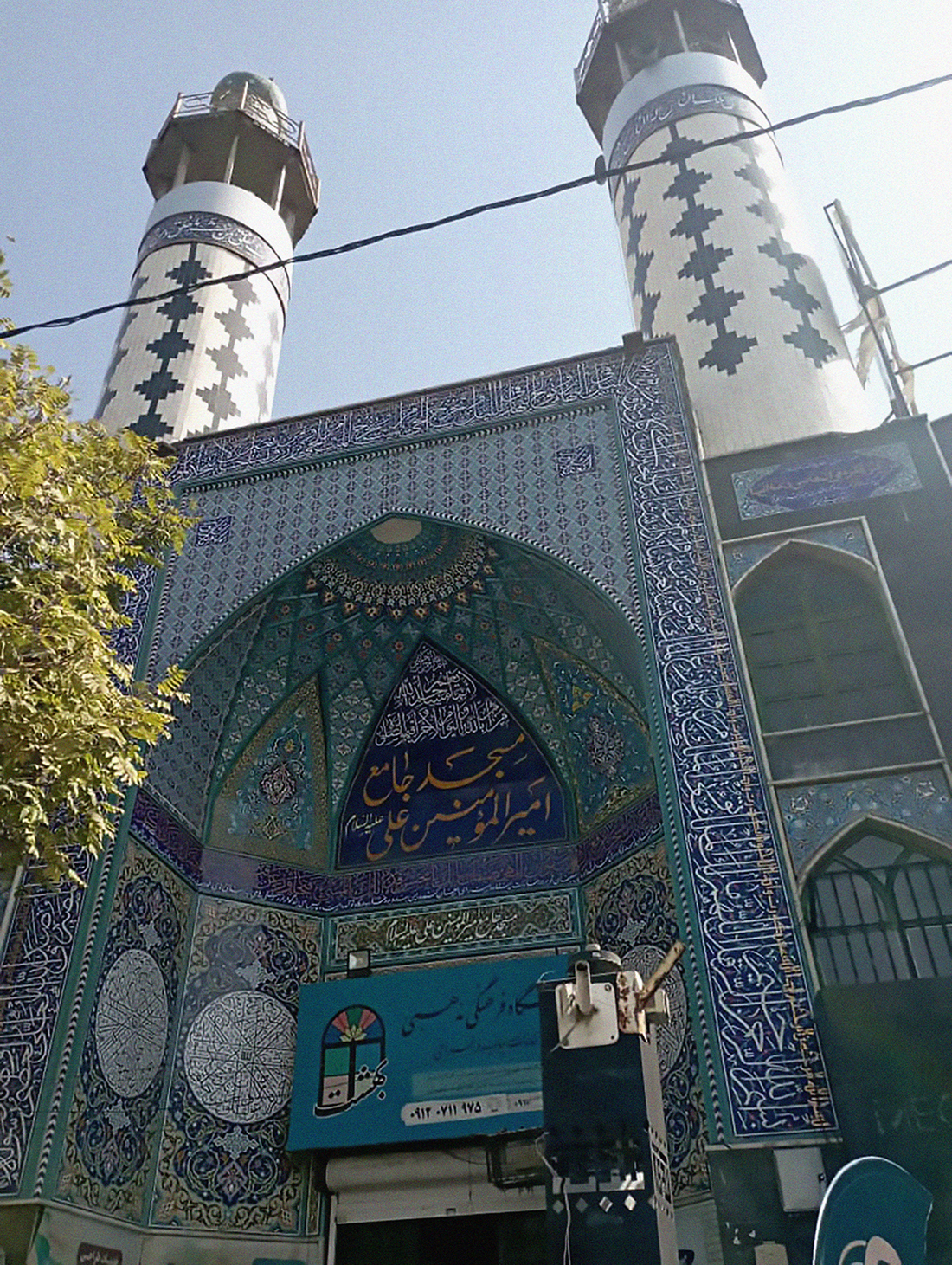
Jame Mosque of Amir Al-Momenin, Tehran. Photo credits: Naqme Eslami

Musical Variability and Regional Sound Cultures

I grew up in a place where the muezzin holds a respected position and the sound of the adhan occupies a special place in the soundscape. I imagine that for anyone raised in such an environment, there is a sense of what could be called a sonic occupation—a sound that shapes space and identity. I was born and raised in Aleppo, a city where religious music—both Christian and Islamic—plays a central role in the broader musical landscape. I even believe there is an older Jewish influence that, though rarely discussed today, remains deeply embedded in the city’s musical memory—an influence that was largely erased or disrupted as a result of Zionism, which cut the historical ties between Jewish communities and the regions where they had long lived and interacted.

The adhan has its own value, and the muezzin is required to have some musical knowledge. He must know maqams, or if he doesn’t know them theoretically, he is certainly trained in them. A good number of muezzins know musical maqams and choose them appropriately for each time of day—morning (Fajr – فجر), noon (Dhuhr – ظهر), afternoon (Asr – عصر), sunset (Maghrib – مغرب), and night (Isha – عشاء). Because of its connection to music, the adhan delights even people who do not belong to the Islamic faith.

The adhan is not monolithic; it differs in melodic movement, points of articulation, melismas, microtones and sometimes even in wording, as mentioned above—from one region to another, from one country to another, and from one sect to another. Its musical structure generally adapts to the local musical system and soundscape, reflecting both regional aesthetic preferences and broader religious norms. Most adhan styles are closely linked to Qurʾān recitation traditions, illustrating that the adhān functions as a living musical archive, transmitting religious and cultural knowledge simultaneously.

For example, in Sudan, the call may employ pentatonic scales, reflecting local musical preferences (example). In Syria (example), Turkey, and Egypt (example), the adhān commonly draws on maqāms used in classical Arabic and Ottoman music. In Indonesia and among Uyghur communities in China, different modes are used (example), reflecting the adaptation of Islamic practice to local auditory norms, although sometimes elements of Arab performance styles are borrowed as the Arab peninsula is often considered the most authoritative source of religious knowledge. North Africa, particularly Morocco and Algeria (example), displays additional variation in scale, phrasing, and melodic ornamentation.

Listen below to a Maghrib adhan from Shah Mosque, Borujerd in Iran, performed in Bayat Turk. Even within the Arabian Peninsula, there is a notable tradition of reciting the adhan in a restrained manner, avoiding excessive musicality.


Mustafa Said says in his podcast (Arabic) about the recording below:
“The Hijaz maqam is the most famous maqam used in our time for the adhan, and originally it was the maqam used for the Asr adhan. This maqam became well-known because the pilgrimage caravan used to depart after the Asr prayer—pilgrims would pray Asr and then set out with the caravan out of the city. This practice existed in Cairo, Damascus, Istanbul, and other cities.


In 1903, the Egyptian pilgrimage caravan returned with Shaykh ʿAbd al-Hādi Makki, one of the Meccan reciters and muezzins. He performed the adhān for the caravan, and it is said that the representative of the Gramophone Company loved it so much that he recorded it before leaving. The matrix number on the disc confirms it was recorded in Cairo in 1904 for Gramophone.”
One example from Syria (see below) is a choral adhān performed by the “Damascus Association (Rabitat Dimashq)” at the Umayyad Mosque, as broadcast on Syrian television.
Here is an example of the adhān reflecting the Najdi musical style in Saudi Arabia. Another well-known version is the adhān of the Grand Mosque in Mecca, performed by Sheikh Ali Mulla, which is now frequently used in alarm clocks.

Many muezzins follow the tradition of placing their index finger on their ear while performing the adhan, mainly because there is a narration indicating that Bilal ibn Rabah used to do this.

Practically, it also helps them hear their own voice more clearly. You can try it yourself and notice the difference.

Sound, Authority, and Political Regimes

The adhān’s sonic characteristics are also influenced by political authority. In Saudi Arabia, austerity and fundamentalist interpretations have minimized the musical dimension of the call, emphasizing functional recitation over aesthetic performance. By contrast, in Egypt, Turkey, and Syria, musical styles persist, signaling continuity with historical traditions.

Regimes selectively shape the adhān to reflect ideology: in some Salafi or jihadist contexts, musicality is restricted in theory, yet vocal propaganda employs very Western polyphonic and harmonic techniques. These contradictions underscore the instrumentalization of sound for political ends.

In some contexts, activities such as sports matches or even concerts pause when the adhan begins in the background. For many believers, the adhan carries deep emotional and spiritual weight. Because of that, it can also create a strong sense of guilt if it starts while someone is engaged in something considered sinful or inappropriate—like watching pornography.
Grand Mosque, Tirana, Albania. Photo by the author.

Gendered Dimensions of the Adhān

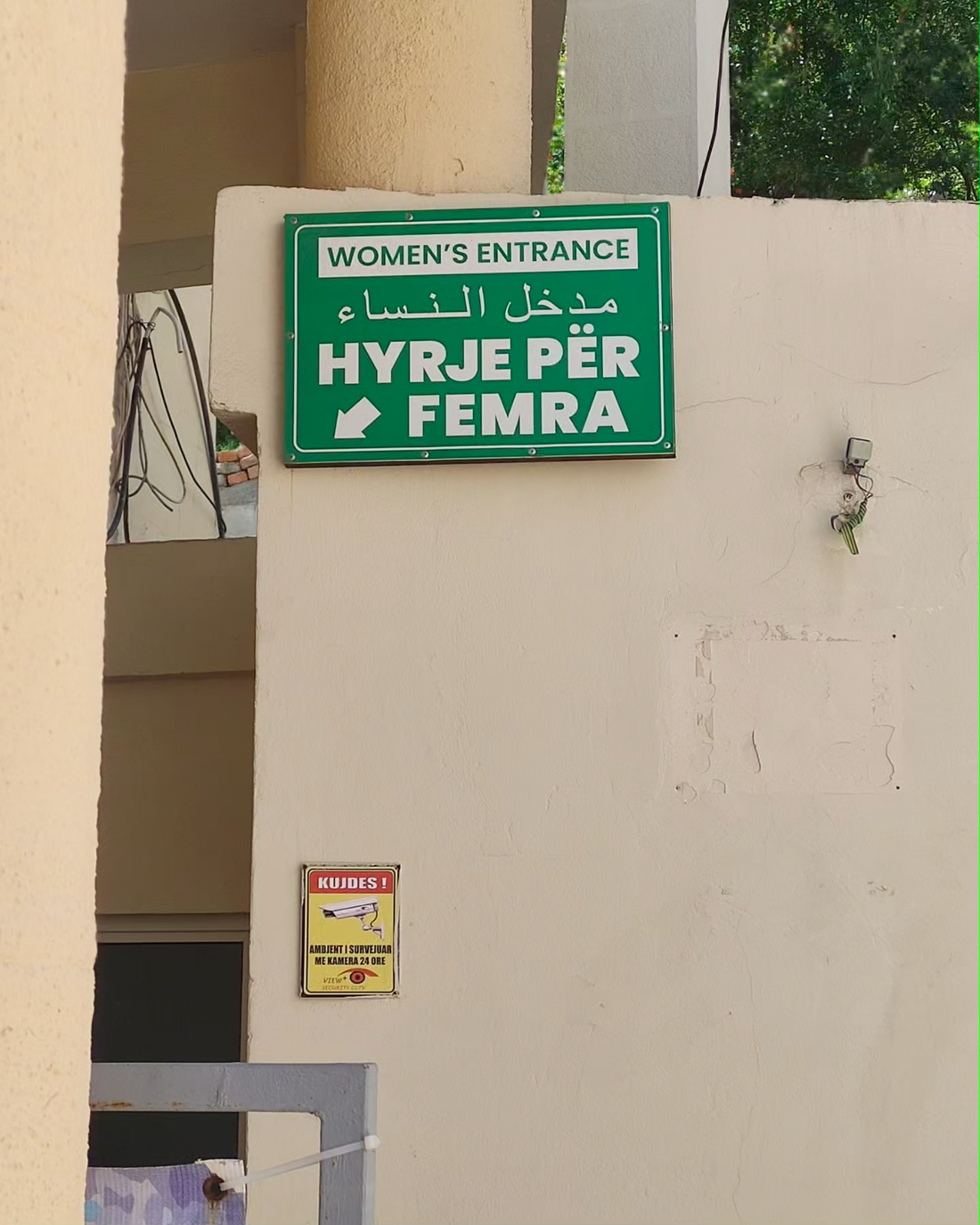
Traditional Sunni and Shīʿī jurisprudence permits women to perform the iqama (shortened call) for women’s congregations but generally prohibits public adhān in mixed-gender settings. In some communities, particularly in China and in experimental European or North American mosques, women have performed the adhān for female-only congregations, challenging conventional restrictions.

In China, particularly among the Hui Muslim community, there are long-standing women’s mosques with female imams (nü ahong). In those settings, women sometimes perform the adhan/iqama for all-female congregations. In Europe and North America, a few experimental communities (e.g., led by scholars like Amina Wadud or in “inclusive mosques”) have had women give the adhan in mixed settings — but this is very new and contested. In Turkey, the Diyanet (official religious authority) stated in 2021 that women are permitted to call the adhan in all-female contexts, though the public minaret call is reserved for men.

The presence or absence of female voices in these contexts highlights the intersection of gender, religious authority, and acoustic politics.
Islamic Center Of The Raval Of Barcelona. Photo credits: Victor Stutz

Mosque Architecture and Acoustic Presence

Mosque structures traditionally facilitate the adhān, projecting sound through minarets and domes. In diaspora contexts, spatial and regulatory constraints often limit the volume and reach of calls. European mosques are frequently repurposed buildings, lacking the architectural amplification of traditional minarets. In spaces where the adhan is amplified, electronic speakers are now often used to project the call. Registration of mosques as “Islamic centers” in some European cities reflects both compliance with local law and adaptation to societal pressures.

The spatial and acoustic configuration of mosques directly informs who can be heard, how, and where. Minarets, beyond signaling prayer, can also serve ceremonial, commemorative, or warning functions, illustrating the multi-functional role of religious architecture in the politics of sound. I remember that some mosques in Syria, on 08 Dec 2024, announced the fall of Assad’s Regime.

There is something interesting: for example, in Europe, East or West, or in places with Muslim minorities, you find different mosques. For example, there are mosques attended by Turks, mosques attended by Arab Sunnis, Eastern Arabs, mosques for North Africans, mosques for Asians, and differences between sects. This diversity may not exist in the same way even in countries with a Muslim majority.
Adhan alarm, Antwerp, Belgium. Photo by the author.

Diaspora Contexts and the Politics of Public Sound

In Europe, the adhān is often restricted or contained. Noise regulations, local ordinances, and social resistance shape its audibility. Unlike church bells, which enjoy institutionalized acceptance, the adhān frequently encounters social scrutiny, illustrating the politics of auditory inclusion.

There are, however, exceptions: for example, in 2017, a mosque in southern Sweden has been granted permission to broadcast all five daily calls to prayer through loudspeakers, according to local Muslim official Abudulrahman Tamarji, head of the Islamic Cultural Association in Karlskrona, Belkin district. Tamarji noted that this marks the first time a mosque in Sweden has received approval to amplify every one of the five daily adhāns.

These conditions reflect broader dynamics of Islamophobia and minority visibility. The regulation of sound acts as a proxy for broader social control, defining which communities are permitted to occupy public auditory space. Despite these constraints, Muslims employ digital technologies such as mobile applications, pre-recorded broadcasts, and alarms to maintain ritual continuity.

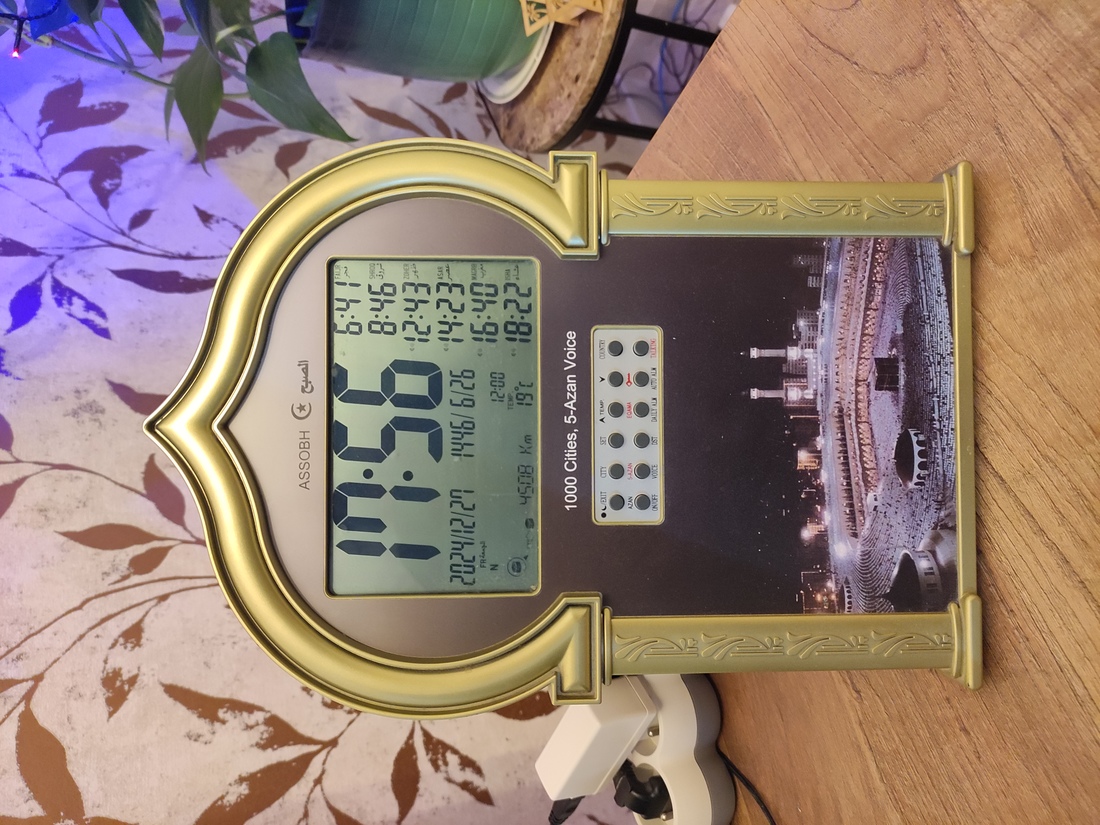
Nowadays the Adhan is broadcasted on speakers, and to some extent in some TV channels. Many Muslims often rely on mobile apps or wall clocks to remind them of prayer times. When the time comes, these devices play the adhan—often in the voice of the Meccan Haram muezzin. Much of this “Islamic kitsch,” including clocks and other commercial religious items, is produced in China.

Of course, there is the issue of personal freedom and the freedom to choose what you want to hear and what you don’t. Certainly, there are Muslims, Christians, and atheists who don’t want to hear it, but it is there—and even if you don’t want to hear it, its absence creates an auditory void. Whenever you hear the adhan after some time away, it stirs feelings of nostalgia, a connection to a soundscape that has shaped daily life and memory.
Esmahan Sultan Mosque, Mangalia, Romania. Photo by the author.

Fieldwork in Romania: Mangalia and the Esmahan Sultan Mosque

I have been living in Romania for some time now. Recently, while speaking with someone in Syria, I received a voice message in which the sound of the adhan could be heard in the background. That familiar sound immediately stood out. In Europe, the adhan is rarely audible in public; it is often subdued, hidden, or confined to private spaces. This absence reflects not only regulations related to noise and public order but also deeper cultural and political dynamics, particularly the ways in which Islamophobia and secular norms shape the audibility of religious sound in the public sphere.

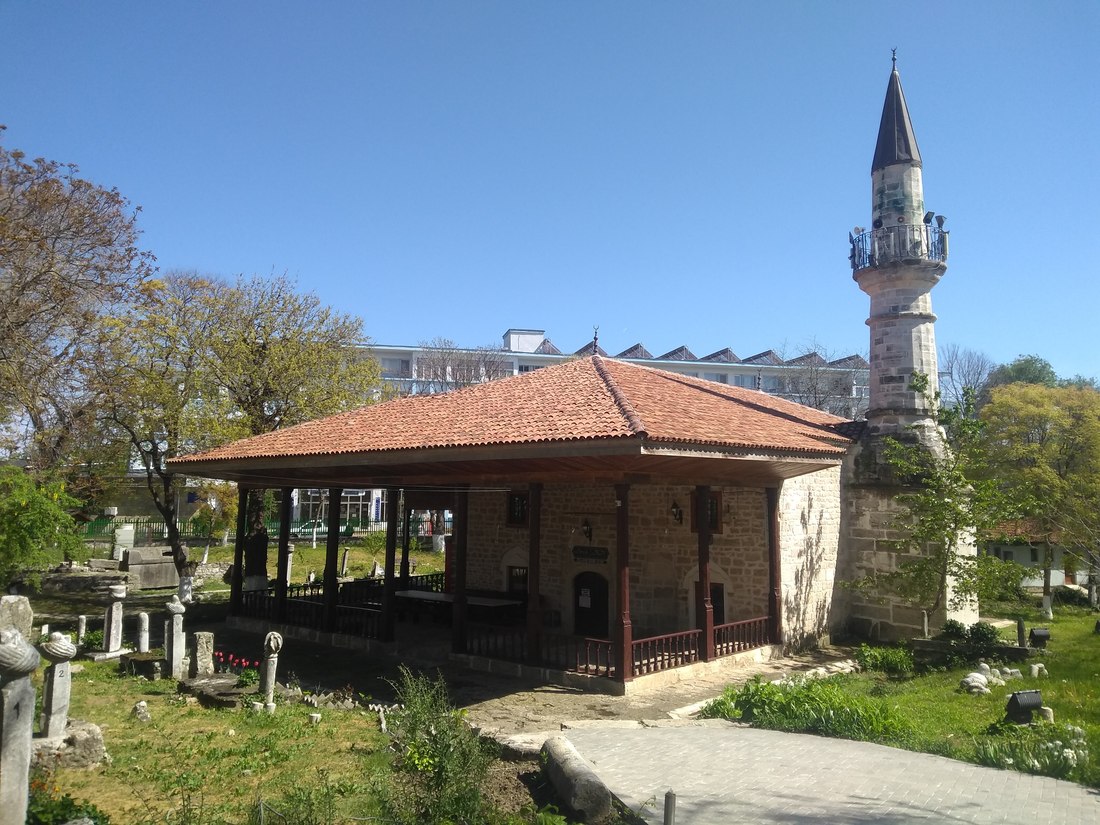
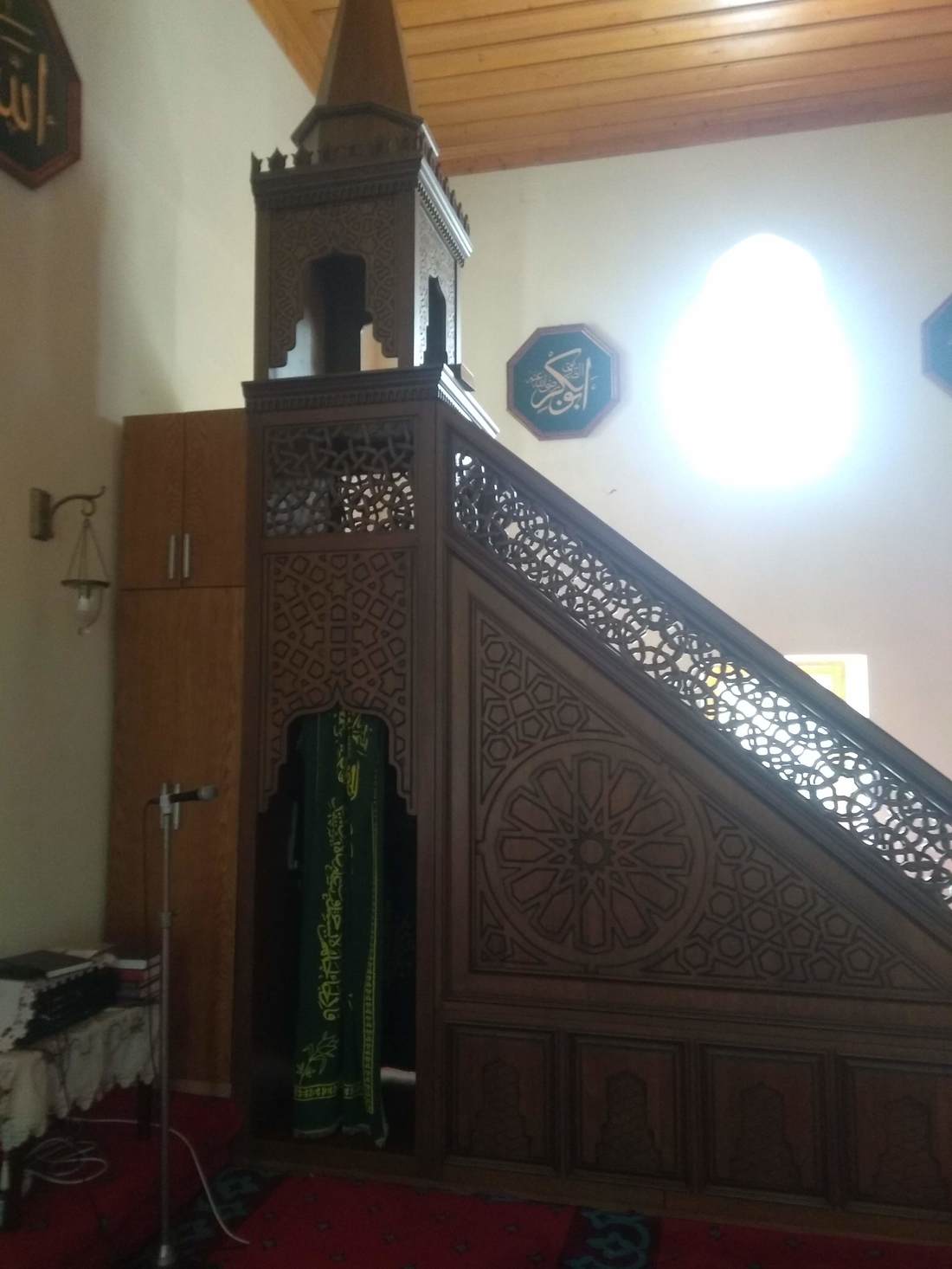
Between 2018 and 2019, I conducted fieldwork at the Esmahan Sultan Mosque in Mangalia, Romania, where many of Romania’s Muslims live. The mosque, likely built in the early 1700s, is part of a network of religious sites in the Dobrogea region served by Turkish Ministry of Culture employees. Approximately seven or eight imams serve various mosques in the area.

During my field visits, I observed that the adhān was broadcast publicly but with limited amplification. The mosque’s surroundings were predominantly Turkish-speaking, with restaurant franchises that had modified their logos to indicate halal options. Few local Muslims from Tatar or Arab communities attended for religious purposes; I later learned that they come in larger numbers only during Ramadan or on Fridays. I also noticed that there are Qur’an lessons for women upstairs, whereas the majority of attendees were tourists.
Inside the mosque, Imam Mohamad Selim — Kurdish, educated in Islamic jurisprudence — performed both the Qur’an and the adhān entirely by ear, using Maqam Bayati for recitation and Maqam Rast for the call to prayer. His vocal performance adhered to local conventions but contained occasional inaccuracies, demonstrating how practice can diverge from formal theory while maintaining legitimacy.

The mosque’s acoustic environment was shaped not only by its architecture but also by urban factors, including traffic noise and overlapping church bells. These elements illustrate how the adhān is integrated and negotiated within heterogeneous soundscapes.

FIELD REPORT. May 2, 2019 – 15:00. The trip to the Esmahan Sultan Mosque in Mangalia had the purpose of documenting the musical aspects of the Azan (call to prayer) and Qur’an recitation.

The social context of the Azan and Qur’an recitation. Guidance from the guesthouse
Staying at a guesthouse near the Esmahan Sultan Mosque, I asked the receptionist for some guidance about the place. I found out that she, although Romanian and living nearby, had never been inside the mosque. She knew of it mainly as a tourist attraction rather than a strictly religious site, and she mentioned that coffee on sand was served there. As for the call to prayer, although audible, it did not sound musical to her ears.

The few parishioners who attended for religious purposes were either locals from the Turkish community, or tourists, businesspeople, and Muslim professionals of various nationalities. I was assumed to belong to the second category, until I revealed that my interest was musical, as a student at UNMB.

The area surrounding the mosque was filled with halal restaurants and shop signs written in Turkish.
Esmahan Sultan Mosque, Mangalia, Romania. Photo by the author.

Esmahan Sultan Mosque

As soon as I entered the mosque’s courtyard, something familiar caught my eye: the classic Muslim fountain used for ablution before prayer and for quenching the thirst of believers. Unlike the crowded fountains of Aleppo, which I was used to, this one had only a single tap, used mostly by passing taxi drivers. Later I would learn that Muslims come here in larger numbers only during Ramadan.

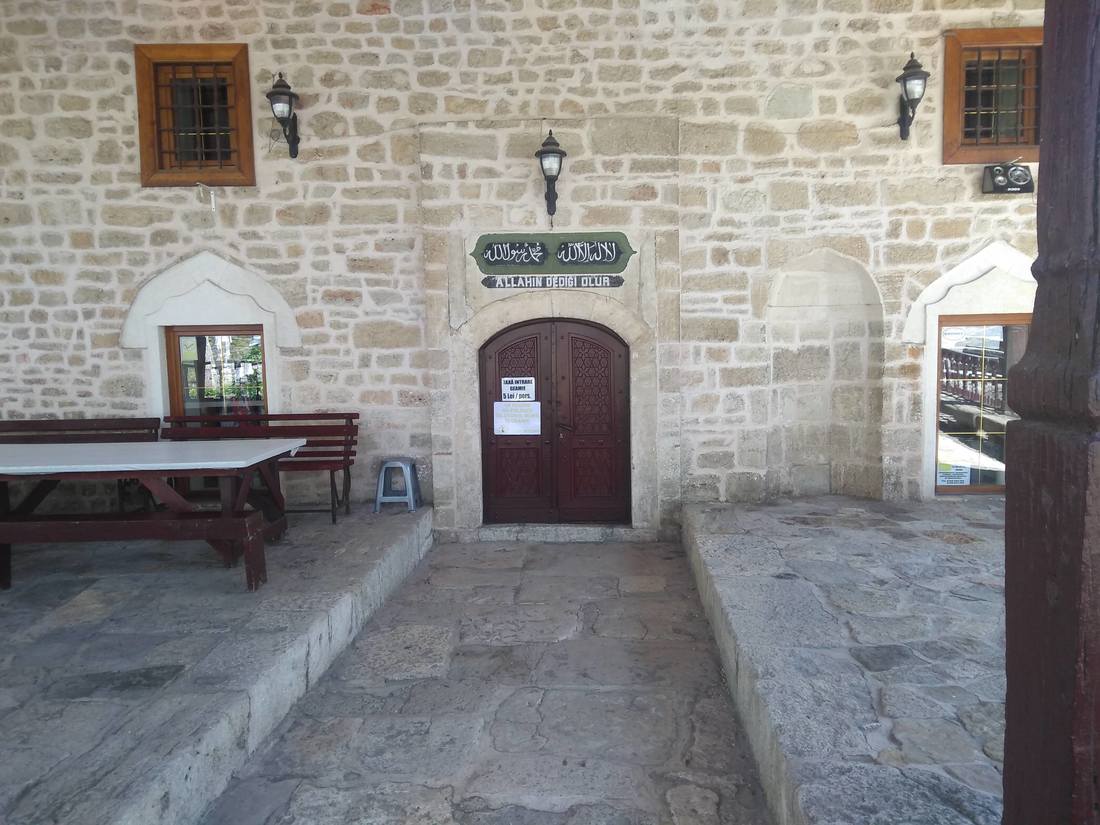
I entered the mosque as a believer, not a tourist, without paying the 5 lei ticket. In the courtyard, two men were speaking Turkish. I asked them if they knew Mr. Halil Esmet, who had been recommended to me as a guide for my study there. At first, the name didn’t ring a bell. I suspected my Arabic pronunciation of the name might have confused them. Eventually, one of them replied in approximate Romanian that Esmet was not there. After I explained my purpose, they clarified that he would not have been able to help anyway, as he was not a Qur’an reciter. Help, however, came directly from one of the two men – the mosque’s imam himself, who spoke only Turkish and Arabic.

Imam Mohamad Selim is one of 7–8 employees of the Ministry of Culture in the Dobrogea region. He is Kurdish, from the Turkish city of Şırnak near the Syrian–Iraqi border. He studied Islamic jurisprudence and learned Qur’an recitation and the Azan by ear. Even if he lacks formal knowledge of maqam music theory (Arabic, Turkish), his performance was neat, though not always accurate. Speaking with me in Arabic, he worried about his language skills but assisted me fully. The two men were very welcoming, offering me a glass of traditional Turkish black tea, brewed in a double kettle, which they presented as being Iraqi style.

They asked about my profession. When I replied that I was a musician, I could read in their expressions a certain disappointment, as if I had mentioned a frivolous or unworthy occupation. But when I said that I was an oud player, they exchanged words in Turkish (tenbur). I gave them a CD of my latest album, and they asked whether it was religious music. From their expressions, I sensed that they would have preferred it to be so. We began discussing music, and I tried to recognize the names of Ottoman musicians they mentioned. In Arabic, I knew them by different names. They kept correcting me: I said Cemil Bey, they corrected me: Tanburi Cemil. At one point, the sound of nearby church bells overlapped with the Azan from the mosque. It reminded me once again of Syria, where such coexistence is ordinary.

May 2, 17:00
I met Mr. Esmet, who told me that more people usually attend the Zuhr (noon) prayer. At the Asr (afternoon) prayer, there were only three of us. During Ramadan, he explained, the Iftar meal takes place daily for 30 days.

May 3, 12:00
When I arrived at the mosque, the imam was upstairs teaching women to recite the Qur’an. Inside, a man started a conversation with me. Upon learning that I was Syrian, he said: “I don’t know what you think, but I consider Bashar al-Assad a patriot.” He then debated with a family of tourists about why women do not pray together with men. I discreetly observed the mosque’s religious customs, which differed from those in the three other Muslim countries I had used as points of reference.
- Imam Mohamad Selim has no formal musical training, but learned the call to prayer by ear. His Qur’an recitation bore noticeable Egyptian influences in intervals, style, and melodic motion.
- In reciting the Qur’an, he used Maqam Bayati, while for the Azan he used Maqam Rast, without modulation and with some inaccuracies.
- People in the area seemed accustomed to the sound of the Azan.
- Islamic practices appeared much more relaxed at the Mangalia mosque compared to other countries.
Esmahan Sultan Mosque, Mangalia, Romania. Photo by the author.

Conclusion: The Adhān as a Sonic Territory

The adhān exemplifies the entanglement of sound, power, and social space. It mediates between religious practice, musical culture, and political authority. Its presence, absence, or modification reflects broader negotiations of community, visibility, and belonging.

The adhān mediates time as much as space. Its five daily occurrences structure communal and individual routines. In diaspora contexts, where sound is restricted, the temporal rhythm persists digitally but loses its public and social dimension. The absence of public broadcast generates an “auditory gap”, affecting both community cohesion and personal experience.

Field observations suggest that even when muted, the memory and expectation of the adhān influence listening habits and temporal awareness. The sound becomes a marker of cultural continuity and diasporic belonging.

Ethnographic evidence from Romania demonstrates how diaspora communities sustain ritual and acoustic traditions under structural constraints, while field reflections from Aleppo highlight the embeddedness of the adhān within dense urban soundscapes. Across contexts, the adhān remains both a ritual performance and a contested sound, illustrating the complex politics of listening and audibility in Muslim communities globally.


    Further Reading:


  1. Fırat, H. B. (2024). Call to Piety: The Role of Adhan in the Shaping Rumi Identity and Governmental Authority in Journal of Urban History, Volume 51, Issue 4.
  2. Font-Navarrete, D. (2016). The Amplification of Muted Voices: Notes on a Recitation of the Adhan. Sounding Out. Available online.
  3. Friscia M. (2022). Reciting the Adhan | Guide to the Islamic call to prayer [History, Meaning and Soundscapes]. Uncovering Sound. Available online.
  4. Hurley, Z. & Elyas T. (2024). Soundscapes of the Adhan, the Islamic Call-to-Prayer: A Semiotic More-Than-Digital Analysis, Postdigital Science and Education 6(3):821-843.
  5. Jethro, D., & Lehloenya, M. A. (2023). Call to prayer: the sound of the adhan, heritage and shifting urban identity in Cape Town. Anthropology Southern Africa, 46(3), 213–228. Available online.
  6. Othman, L. (2017). The Adhan that Emerged from the Stadium A Sacred Sound in a Secular Context ( KCL MMus Dissertation).
  7. Progler, J. (2014). Sound and Community in the Muslim Call to Prayer. Smithsonian Folkways Recordings.
  8. Rabie, D. (2024). The Abu Dhabi Adhan: An Orienting Soundmark Through Scaled Configurations of Space and Time. Journal of Linguistic Anthropology 34(3): 376–395. Available online.
  9. Saber, I. F. (2021). The art of the adhan: The multiple melodies of the Muslim call to prayer. Middle East Eye, available online.


*This article is part of the project The Sonic Turn, co-financed by AFCN. The project does not necessarily represent the position of the Administration of the National Cultural Fund. AFCN is not responsible for the content of the project or the way its results may be used. These are entirely the responsibility of the funding beneficiary.
About the Author

Mohamad Zatari

Mohamad Zatari is an improviser and sonic storyteller from Aleppo, Syria, currently based in Bucharest, Romania. His artistic work is dedicated to decolonizing sound and deconstructing Western perspectives on non-Western music scenes, maintaining a political stance against white supremacy.

He studied classical/contemporary composition at the National University of Music Bucharest (2021), mentored by Mihaela Vosganian. He has been active with the AL.Ehtifal Project, a flexible body of musicians from different backgrounds who come together to create layered soundscapes through improvisation.

Soundcloud
Share this Article
Next Article
SONIC HISTORIES

A Century of Manele: a Sonic Excavation of Romania’s Most Popular Genre

An exploration into the history of the Romanian-Romani ethno-pop music genre manele.

Shaun Williams
More Articles
FROM THE ARCHIVES

None of Us Know the Words: Lessons from the Mid-20th Century Monocultural...

Contesting the vitality of a multicultural, multi-ethnic America, this article offers a glimpse into the Mid-Twentieth Century American music.

Ian Nagoski
SONIC ACTIVISM

How to Perform an Anti-fascist Collective From Sound

This essay examines the idea of the collective and collaboration in relation to, and in resistance against, fascism and populism.

Salomé Voegelin
ANTHROPOLOGY OF SOUND

Thick Listening: Listening in the Thick of It

This contribution introduces the concept of "thick listening" to better understand the pluriform, relational, and unstable quality of listening in everyday situations.

Holger Schulze