Towards a Roma Futurism - Music as a Means for Transnational Communication

Towards a Roma Futurism - Music as a Means for Transnational Communication

December 11, 202512-14 minutes read

Written by:

Cosmo

Share article:

Introduction

The vibrant musical legacy of the Roma people has been a means of cultural expression, identity, and survival for centuries. As we move into a future of growing globalization and technology, Roma music is more than likely to be a key medium of transnational communication, one that transcends geographical, political, and social borders.

By examining Roma historical aspects and the adjacent music tradition alongside emerging futuristic models, this essay aims to portray “Roma Futurism”: a framework in which music is the driving force between intercultural dialogue and connection. I aim to achieve this by employing a critical analysis of past influences and patterns that have shaped the present conditions of Roma people in general, whilst keeping an eye open towards a futurist vision; the end goal is emphasizing the quintessential role Roma music might hold in enabling dynamic exchanges between nations and communities.
Even though Roma music is celebrated as a symbol of Europe’s cultural richness, the community behind this cultural product is continuously marginalized and displaced. (...) Roma presence is tolerated as part of a well confined spectacle, not quite recognized as belonging. Thus, Roma music becomes both a marker of displacement and a symbol of continuity, a way of asserting identity in spaces where political and social recognition are denied.
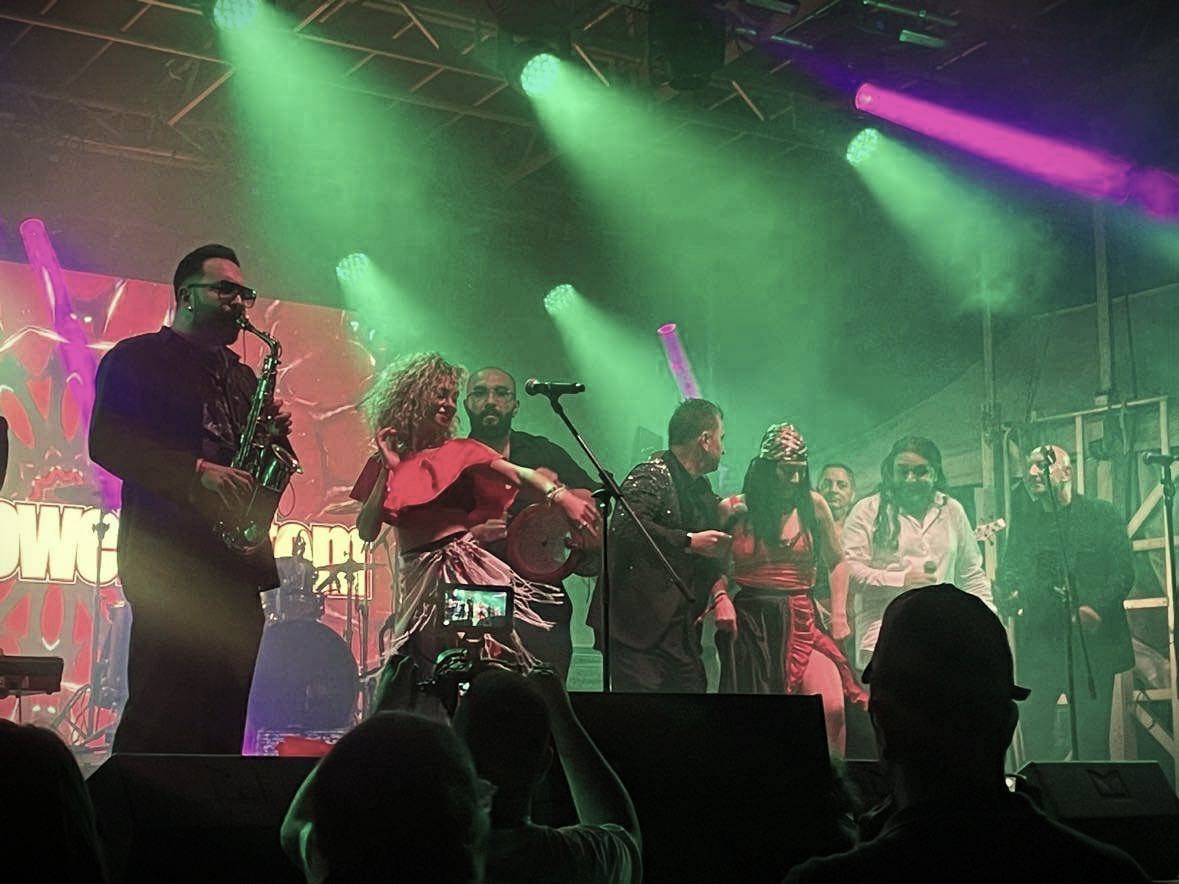
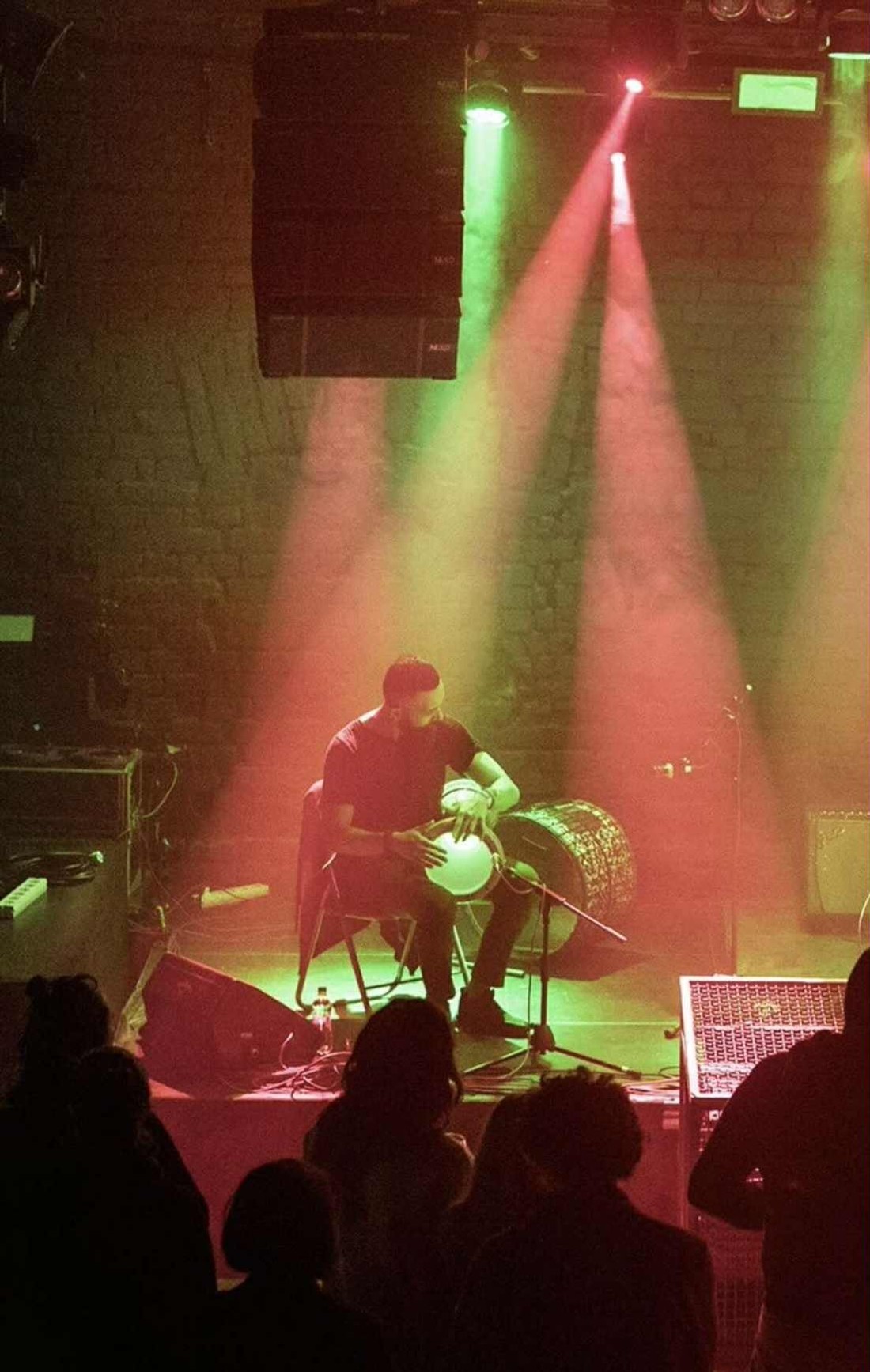
Cosmo live at Control Club. Photo credits:
With the help of new technologies, transnational musical genres, and various uses of virtual spaces, Roma musicians are pushing the frontiers in cross-cultural interactions, thus further establishing the role of sound as a global language that conveys solidarity, resistance, and creativity. It is my belief that the cultural futurism I refer to cannot be separated from the current conditions in which some Roma communities currently live in, conditions that themselves shape the meaning and possibilities of their musical expression.

These types of futurist expressions remain inseparable from the adverse conditions and realities of Roma communities today; but worry not, this is nothing new to us. Resilience has been one of our key characteristics. The vulnerable component has followed Roma communities for much of their history in Europe, whether we talk about forced displacement, systemic violence, and more often that not cultural marginalization. These issues are not just historical, but continue to plague Roma people in contemporaneity.

In today’s Europe we’re witnessing the rise of far-right movements, expulsions, and the continuous portrayal of Roma people as outsiders. However, my proposal is that this vulnerability of the community can also be “approached” from a different angle: Roma are perceived as a fragile entity, yet their survival is never taken for granted. When carving a Futurist view, this sense of perpetual precariousness in turn offers a valuable space for envisioning a future in which we dispute narratives of disappearance, and rather affirm the presence of Roma communities in cities and societies yet to be realized (Brooks 2012, 1-11).

One of the key factors of analysis is the transnational aspect of Roma identity, often described as an “always-already international” minority existing within the spaces between nation-states (Brooks 2012, 5). Albeit a source of vulnerability, this cross-border factor can be seen as a strength within a Futurist perspective. Roma futurism is driven by present day diasporic movements and cultural diversity, thus taking the form of a global condition that anticipates post-national futures.

Being a Minority

In order to better situate Roma Futurism within a broader framework, it is necessary to pause and take a look at certain realities — that of social stratifications; therefore, before moving forward, we must ask ourselves what it truly means to be designated as a “minority”.

A minority is not only defined by numbers, but rather by its relationship to a majority, by the fact that it has been designated a “minority” by others, by the differential treatment it receives, and maybe most importantly in our case, by the self identification of its members as belonging to a distinct group. Minority groups are usually marked by certain identifiable traits (physical and/or cultural) that are socially interpreted rather than fixed or inherent. It is exactly these traits that later serve as a basis for disparate power relations; while the majority controls access to resources, employment, education, health, etc., minority groups are structurally positioned in such a way they have little-to-no access to these resources, and therefore receive fewer opportunities. As the size of a minority group increases, therefore also its visibility, so do the efforts of the majority to maintain the status quo, often through various methods of exclusion.

This unequal relationship takes form in various discriminatory practices that affect life chances and everyday experiences. Avoidance, stigmatization, and in more extreme cases even violence. All these are deployed to strengthen subordination, especially against groups that are perceived as economically “useless” or culturally “too different”. What is of interest here is the way minority groups develop a sort of collective self‑consciousness: an awareness of shared position, common goals, and a destiny shaped by both internal solidarity and external discrimination. This self‑consciousness in turn involves recognizing that marginalization does not stem from any intrinsic qualities of the group, but rather from external evaluations and actions i.e. from the majority. Culture becomes a defining marker, a system of meanings and practices that sustains a distinct way of life (Turliuc 1996, 55-56).

Later, the very mechanisms that define minority status are reinforced and legitimated through racial thinking - a concept which transforms social differences into allegedly natural hierarchies. Despite overwhelming biological evidence that humans across different geographic regions bear little-to-no differences (the only ones being the skin tones variations, which in turn bear no additional significance) our society continues to offer disproportionate importance to these markers. Unfortunately, this mode of thinking has historically generated and continues to generate various ethnic conflicts worldwide. Although it seems spontaneous and widespread, racial thinking is not innate, but rather it emerges in certain socio-historical contexts where unequal power relations between groups require justification. By formalizing and recognizing these hierarchies, racial thinking seeks to transform social arrangements into seemingly unchangeable truths. However, we must keep in mind that racial thinking is nothing but a form of essentialization: it interprets visible traits (such as skin colour) as indicators of deeper, supposedly inherent qualities, that in turn determine patterns of behaviour or moral worth. In its extreme forms, this logic dehumanizes and delegitimates entire groups, reducing them to “non-human” categories.

These processes are backed by ideology, social myths, and various stereotypes; of these stereotypes, the most prevalent is the one in which complex emotions are only available to the in-group, whilst the minority group can only emote “basic” feelings like anger or amusement - nothing too complex. This type of essentialization in turn operates through two very distinct mechanisms. The first one is naturalization - social categories like race or gender are fixed, stable, and necessary. The second is entitativity: the perception of a group as a uniform and inherited entity, where individual qualities are erased in favour of an imagined collective sameness. In both situations, the end result is the same: individuality is removed and replaced by an essentialized identity, a process that gives birth to exclusionary practices and obstructs the recognition of plural, dynamic futures (Wagner 2008, 371-373).

Even though early ethnic theory hypothetical models announced ethnicity as a cultural phenomena that would gradually dissolve through migrations and integration, this initial view proved incorrect; ethnic identities persisted in both highly industrialized societies and post-colonial contexts: new nations appeared despite ongoing pressure towards homogenization. This proved that ethnicity could not be reduced to a transitory cultural layer, but rather a withstanding dimension of social life (Anderson 2007, 209-210).

It is a well known fact that in more modern contexts, ethnicity has experienced a renewal. Ethnic identities have multiplied and blended, serving as markers of distinction in globalized societies. Multiple identities are assumed at once, ethnicity surfacing more in some contexts and less in others (Anderson 2007, 216-220). This complexity highlights the need for a perspective that surpasses essentialist and/or deterministic models. For Roma Futurism, these types of evaluations are crucial, as they accentuate the dynamic facet of Roma identity.

Our identity is definitely not static, but capable of being re-signified through cultural production, mobility, and speculative imagination of futures beyond the restraints of majority power.

Roma Music - Our History and Our Future

It is my belief that of all the multi-faceted cultural dimensions of the Roma people, music is what makes us truly stand out. Personal (musician) bias aside, it’s not difficult to see how intertwined Roma people and music are: the level of musicianship of Roma instrumentalists, the degree to which Roma music manages to convey certain feelings and emotions, and maybe most importantly, the way music “follows” us from an early age all the way to the grave (we not just have music for baptisms, but also for funerals). These are just to name a few aspects of this important relation. Beyond this role within Roma communities, music has also served as a powerful medium of intercultural dialogue. For a long time it has been the site for constant “negotiation” in Central and Eastern Europe, functioning as both a marker for difference and a medium of exchange between Roma and the Others.

Historically speaking, spaces of interaction between Roma and the majority were quintessentially shaped by musical practices; these structured communication and created opportunities. Public performances of Roma musicians, whether in the streets of Budapest, Bucharest, Vienna, etc., were not just entertainment, but also served as a form of cultural mediation. These “zones of contact” allowed the musicians to insert themselves into the urban landscape, challenging essentialist views and establishing Roma presence in everyday life of the European cities (Piotrowska 2022, 168-170). This historical dynamic is essential in imaging a Roma Future; it showcases how sound/music can be utilized as a means of visibility and self agency. Public space can be claimed (rightfully so) through music.

However, things are not that simple. Because of this long lasting relationship Roma people have with music, we also have the so-deeply-rooted stereotype of “gypsy musicality”. Ever since the Enlightenment, scholars and artists have depicted Roma as inherently musical migrants, romanticized for their emotional exuberance and reduced to a supposed genetic trait.

By the 19th century, this stereotype had transformed into a cultural fetish, simultaneously glorifying and exoticizing Romani musicians. Hungarian virtuosi such as János Bihari and Panna Cinka were showcased and celebrated in operas, paintings, and dictionaries of “great Gypsy musicians,” yet their talent was always framed through the lens of exoticism rather than professional achievement. Similarly, Romanian lăutari (initially enslaved and later admired in most important urban centers), despite their quintessential role in forming national culture, were still seen as an outside presence (Piotrowska 2022, 169-173). Throughout history, Romani musicians have been negotiating their own identity within pre-existing unequal power dynamics, using music as a sort of “social elevator” while trying to escape reductive narratives.

Therefore, looking towards what’s to come, the futurist argument is strengthened by what has been–the way Roma musicians have historically negotiated identity through various times. For example, let’s take a closer look at Romanian lăutari - these professional Romani musicians did not just inherit a stereotype of “innate musicality”, but rather they actively carved themselves a social dimension in which their artistry elevated them above marginalization. By differentiating themselves from other Roma groups and participating in dominant Romanian society, the lăutari inadvertently blurred some of the ethnic boundaries throughout history; they managed to insert themselves in the national imaginary, although still bound to a certain degree of discrimination and racism (Beissinger 2001, 24-26). These types of strategies showcase Roma musicians not only as victims of racism and prejudice, but as agents of cultural difference–something that now resonates with Roma Futurism’s emphasis on self-determined identity (especially with the help of music).
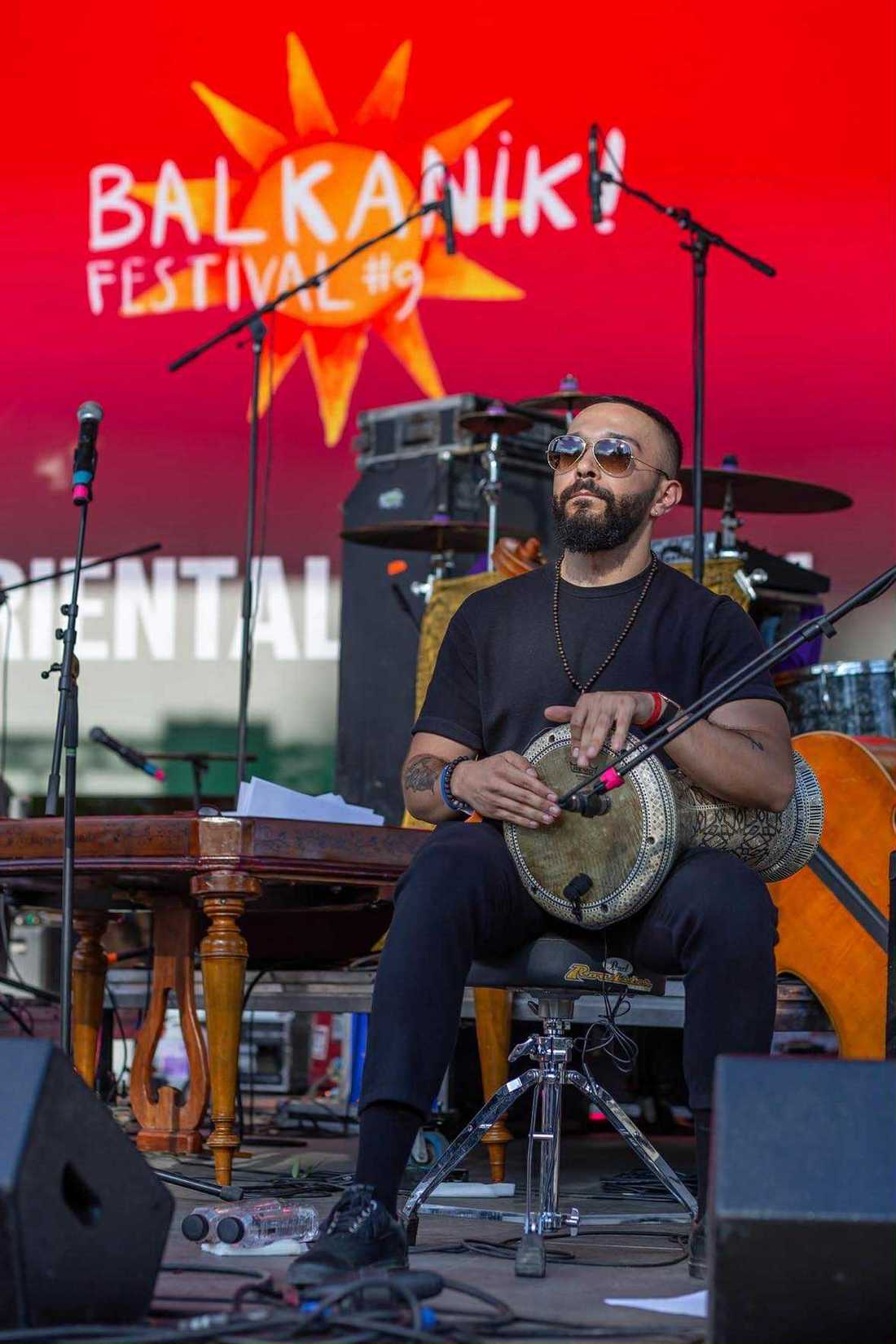
Cosmo live at Balkanik Festival. Photo credits:

Roma Futurism

While there is a big push for an association between Roma Futurism and activist art and other adjacent speculative cultural production, I would like to argue that Roma Futurism will rather be driven by organic musical practices that transcend borders. Referring to contemporaneity, starting with the fall of Yugoslavia in the early 90s and culminating with the somewhat lax open border policies of the EU in the late 2000s, Roma musicians have travelled across regions performing at weddings, baptisms, etc. for diaspora Roma communities in Austria, Switzerland, Belgium, France, and beyond.

These performances are not driven by any external forces nor are they framed as activism; they are the truest expressions of transnational identity and cultural continuity. These are the future. In contrast, NGO sponsored activist songs tend to be solitary productions tied to specific campaigns and/or funding cycles. Although well intentioned, through their very nature – that of a top-down approach – these songs/activist campaigns fail to carve out a long-lasting effect. Songs that were composed as part of various activist campaigns, despite some initial popularity, were likely never performed again outside their original context. Of course, not to dismiss their effort entirely; such initiatives can indeed raise awareness and provide much needed platforms for Roma. However, to restate my view on the topic: Roma Futurism cannot be built on an institutional platform; through the very nature of the Roma community, its Futurism will categorically be organic and grassroots driven (Silverman 2024, 66-70).

One of the most striking aspects related to Roma people and Roma culture currently is the fact that even though Roma music is celebrated as a symbol of Europe’s cultural richness, the community behind this cultural product is continuously marginalized and displaced. Live musical performances and digital recordings circulate freely across borders, but sadly they unfold against conditions of exclusion: Roma presence is tolerated as part of a well confined spectacle, not quite recognized as belonging. Thus, Roma music becomes both a marker of displacement and a symbol of continuity, a way of asserting identity in spaces where political and social recognition are denied.

The flow of Roma music across diasporic spaces highlights the tension between visibility and exclusion, transforming sound into a transnational language of survival and resilience(Imre 2008, 329–335). But what is the view of the entities behind Roma music? Well, Roma musicians are not just passive participants in this dynamic. Repertoires are reshaped, styles are adapted, collaborations are made (mostly with non-Roma musicians) in order to leverage a certain degree of self-agency within transnational circuits. It’s no secret that festivals and intercultural projects can easily commodify Roma identity into an exotic “spectacle” aimed at meeting the outsiders expectancy of this ethnicity, but luckily they sometimes open spaces for dialogue and recognition. By using their music as a medium of resistance and solidarity, Roma musicians inadvertently display both vulnerability and resilience; we can use this as a starting point for imagining futures in which creativity and adaptivity become sources of strength rather than markers of marginality. Again, Roma Futurism seems to be characterized by a duality: identity is constructed in problematic spaces yet later re-signified through cultural production. In this manner, we can anticipate post-national spaces where belonging is not bound to territory, but to the imaginative power of music (Imre 2008, 334-335).

Despite public opinion, the term “Roma” does not denote one single clear stable category; there is no Roma cultural monolith, no single shared language, religion, historical narrative, self-identification, etc. Maybe this could indicate why music, rather than institutional cultural productions, becomes the most viable medium for constructing Roma Futurism. Because contemporary Roma identity is not anchored in numerous shared cultural markers but is instead shaped through external classification (Law and Kovats 2018, 21), Futurism emerges not from bureaucratic or theoretical definitions but from lived, transnational practices.

Music is definitely one such practice. Because, as mentioned before, Roma communities do not share a standardized language (Roma itself comprises more than 50 dialects, many of which are not understandable by other Roma communities)(Law and Kovats 2018, 23–24), music becomes a more “present” connective tissue than linguistic or institutional frameworks alone. Roma musicians have long moved across borders, taking with themselves repertoires, styles, and practices that resonate across Roma communities regardless of dialect, religion, and even national belonging. In this sense, music does what the political identity cannot: it creates continuity without being conditioned by homogeneity.

It is my opinion that this type of transnational practice is especially significant given the tension between self-identification and external categorization from the majority that we mentioned in the beginning of the article. As a minority, we have the right to determine what is ”ours”, what we can truly call “Roma.” And there is no better expression of that identity than our music. Romani music is not produced by political agendas, nor does it require any institutional validation. Weddings in Vienna, baptisms in Brussels, or diaspora gatherings: these are the true sites of Roma Futurism, where identity is present in a live form, and not administered. Therefore, when Roma musicians adapt their repertoires, collaborate with non-Roma artists, or navigate the exoticizing spaces of festivals, they are not merely taking part in transnational circuits, but are actively building self-identification and producing new forms of belonging. Their music becomes a speculative infrastructure for Roma Futurism, a future in which creativity and mobility are sources of strength and gain, rather than markers for marginality. Music does not simply accompany Roma Futurism – it generates it.
Conclusion

Therefore, Roma Futurism is obviously not capable of being restricted to institutional narratives, activism campaigns and externally defined cultural programs. While they may raise awareness and contribute financially, they cannot nurse the type of continuity that Futurism requires. Instead, Roma Futurism emerges from the very practices that have accompanied us for centuries: mobility, adaptability, improvisation and the use of music as a transnational language of belonging.

Roma Futurism is not a speculative element imposed from above (please see earlier discussion about Roma Activism), but rather an already lived dimension. It is already abundantly present in the everyday practices of Roma musicians who cross borders, adjust traditions, and create pillars of resistance in environments that hold disdain for their very existence.

This music points toward a future in which belonging is not granted by an external entity, but taken and forged through creativity. And I know this might sound utopian, but it’s actually unfolding in real time. Roma Futurism is, and always has been, carried in our music.


    Further Reading:


  1. Anderson, Alan B. The Complexity of Ethnic Identities: A Postmodern Evaluation. Lanham: University Press of America, 2007.
  2. Beissinger, Margaret H. “Occupation and Ethnicity: Constructing Identity among Professional Romani (Gypsy) Musicians in Romania.” Slavic Review 60, no. 1 (2001).
  3. Brooks, Ethel C. “The Possibilities of Romani Feminism.” Signs: Journal of Women in Culture and Society 38, no. 1 (Autumn 2012): 1–11. Available online.
  4. Imre, Anikó. “Roma Music and Transnational Homelessness.” Third Text 22, no. 3 (2008): 329–335.
  5. Law, Ian, and Martin Kovats. Rethinking Roma, Mapping Global Racisms. London: Palgrave Macmillan, 2018.
  6. Piotrowska, Anna G. “Introduction: The Space for/of Romani Music.” In European Roma: Lives beyond Stereotypes, edited by Eve Rosenhaft and María Sierra. Liverpool: Liverpool University Press, 2022.
  7. Silverman, C. “Politics, Activism, and Romani Music.” In The Routledge Handbook of Popular Music and Politics of the Balkans, edited by C. Baker, 66–70. London: Routledge, 2024.
  8. Turliuc, Nicoleta. Minoritari, marginali, excluși – Construcția identității minoritare de eterogenitate culturală. Iași: Polirom, 1996.
  9. Wagner, Wolfgang. “Construction and Deconstruction of Essence in Representing Social Groups: Identity Projects, Stereotyping, and Racism.” Culture & Psychology 14, no. 3 (2008).

*This article is part of the project The Sonic Turn, co-financed by AFCN. The project does not necessarily represent the position of the Administration of the National Cultural Fund. AFCN is not responsible for the content of the project or the way its results may be used. These are entirely the responsibility of the funding beneficiary.
About the Author

Cosmo

Musician based in Bucharest; his area of interest includes the Balkans and the Ottoman cultural heritage from this area, as well as from Turkey.

Share this Article
Next Article
ARCHIVAL LISTENING

(Un)Listened Heritage

An interrogation into how we listen to works that belong to the intangible cultural heritage.

Maria Balabaș
More Articles
PERSONAL ENCOUNTERS

Roma Agencies Beyond Contemporary Bias

While we progressed towards where we are (the ruins of Modernity), others went somewhere else, all of it happening simultaneously.

Stefan Fraunberger
DECONSTRUCTIONS

The Music of the Other

In today’s globalist existence, the Other is everywhere, everyone is an Other for somebody; this is an attempt to deconstruct the way we, as a society, perceive the Stranger.

Cosmo
FOCUS ON

Collecting My Heritage(s)

Building a music collection might have implications for the discovery and conservation of a music heritage.

Claudiu Oancea