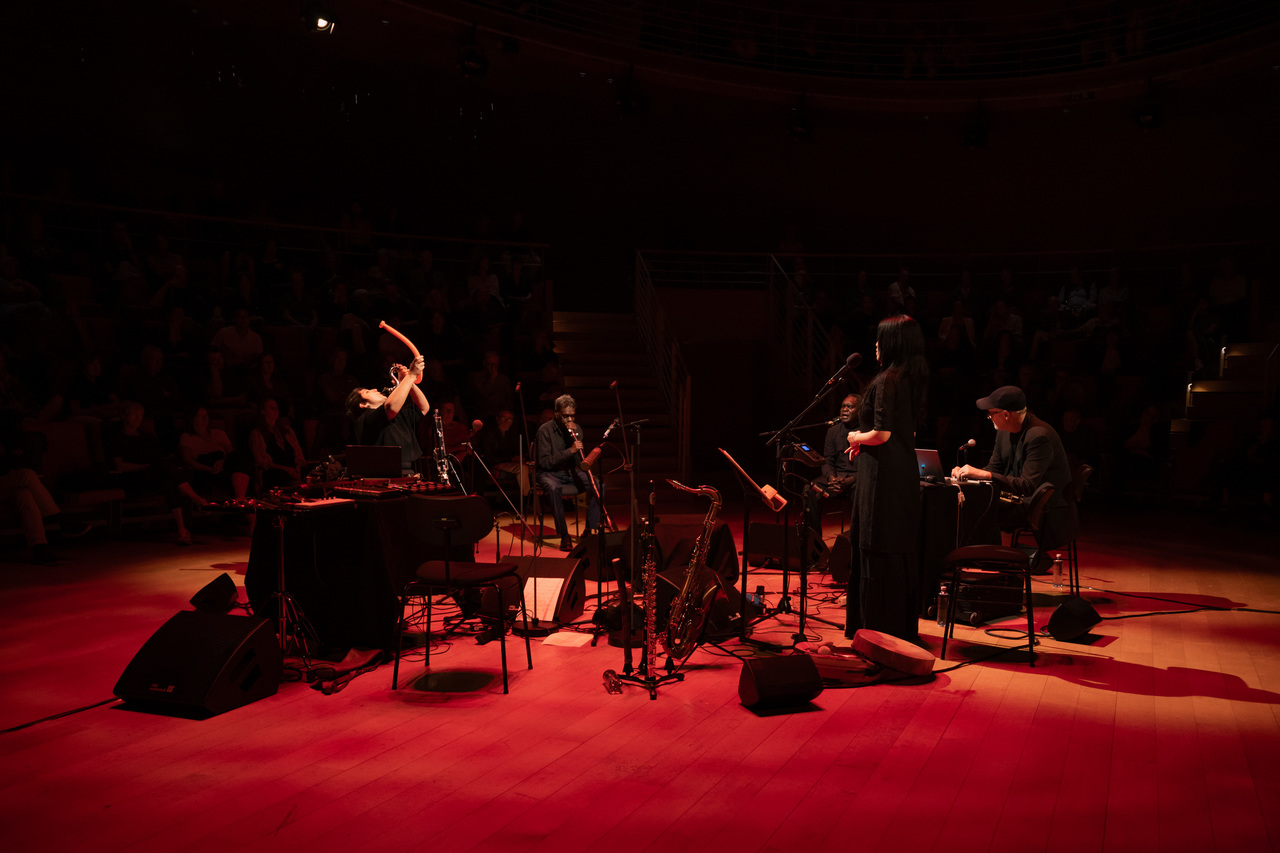
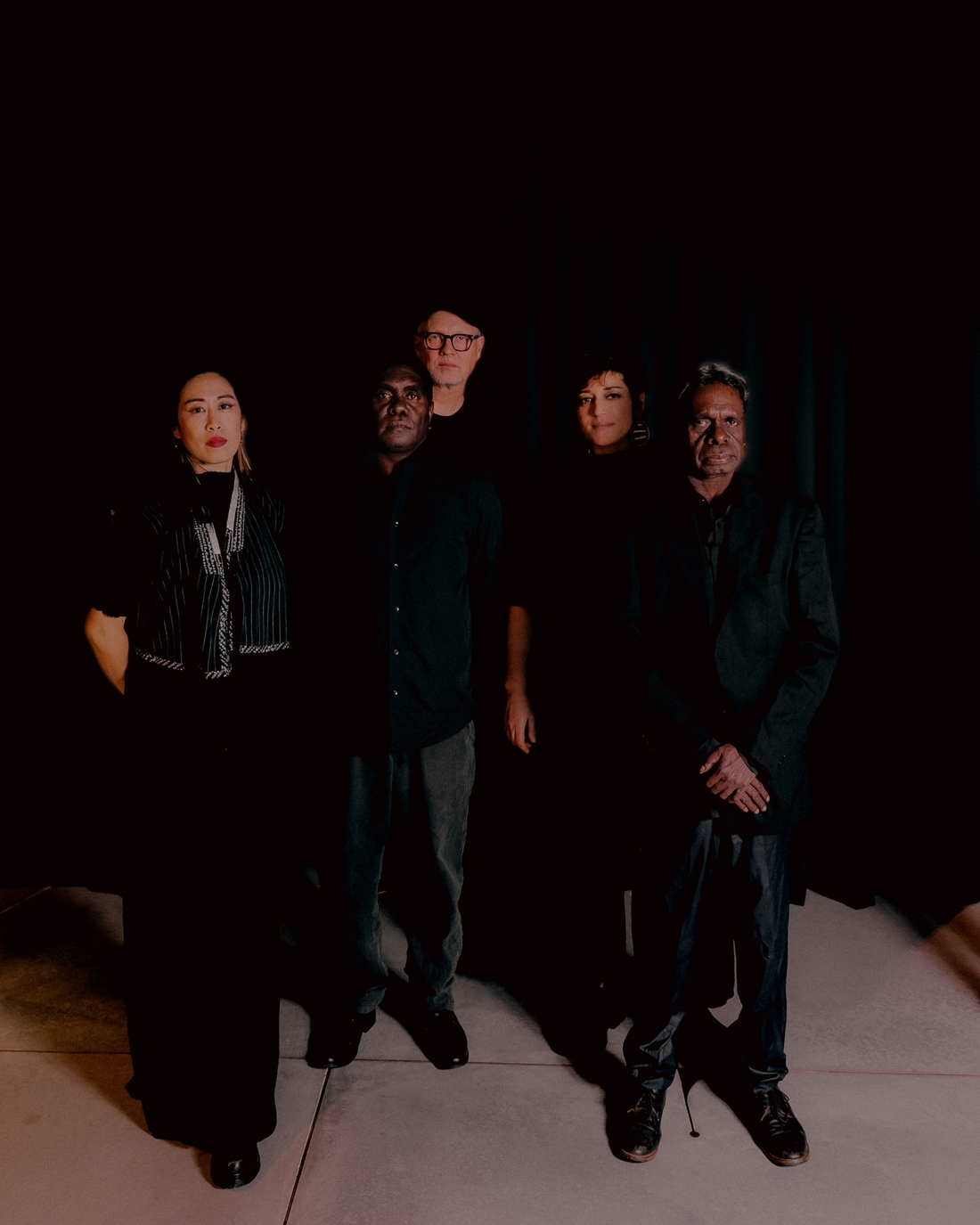
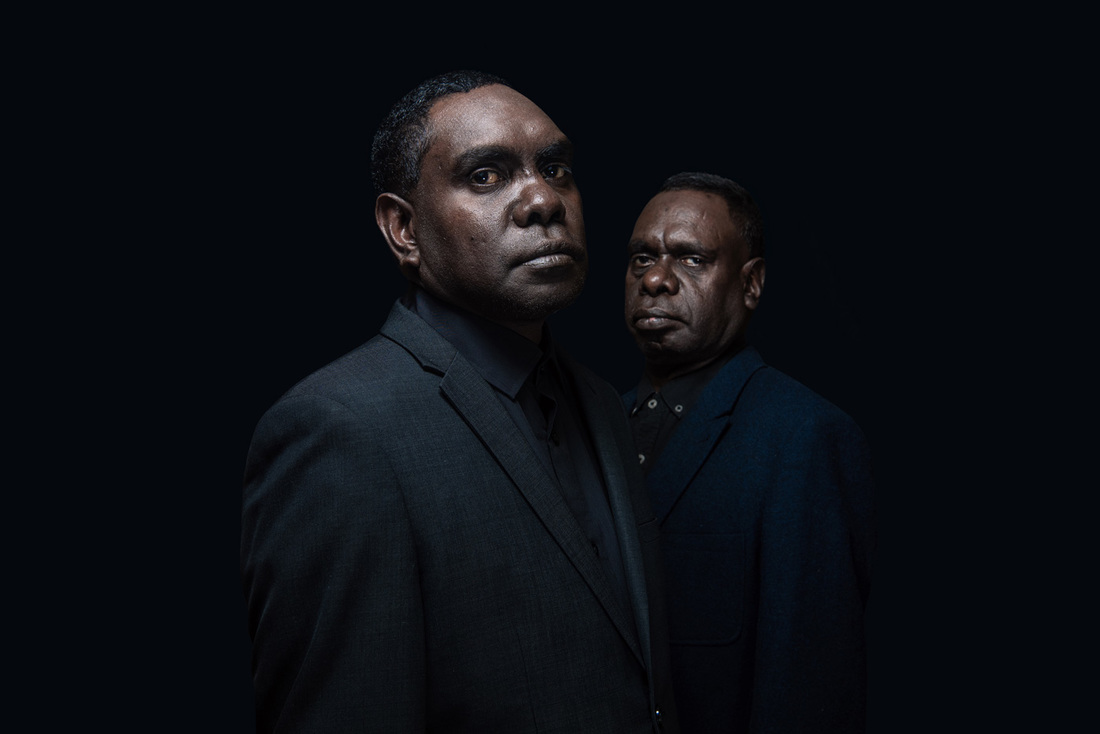
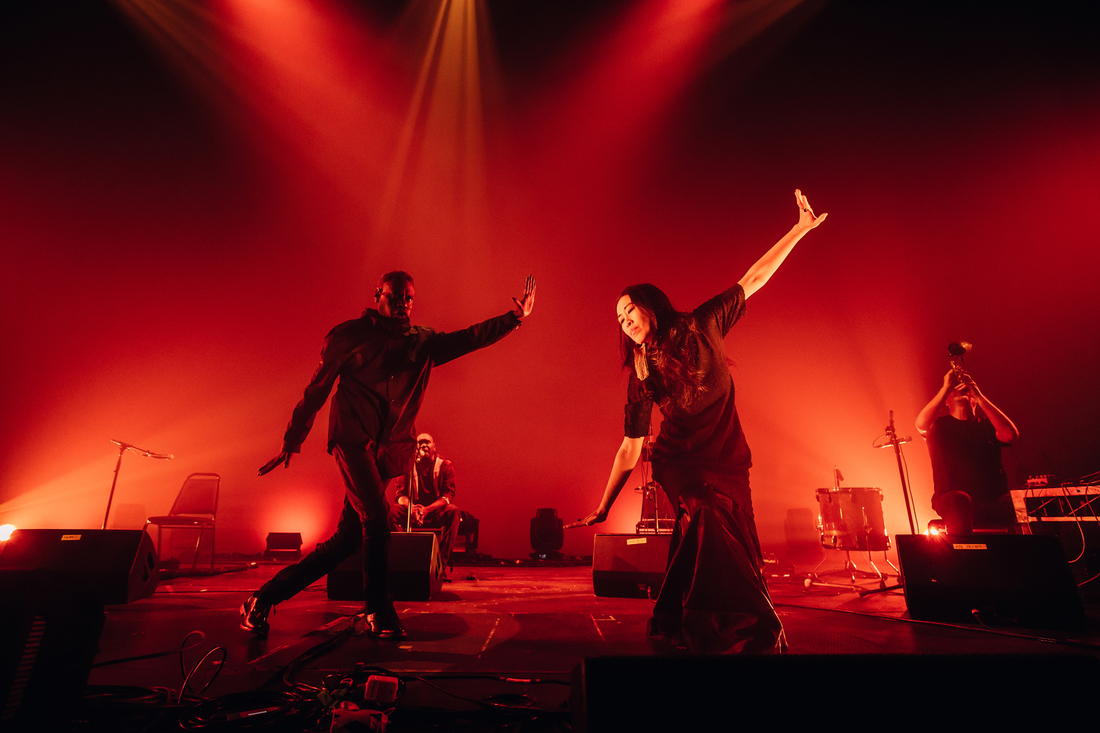
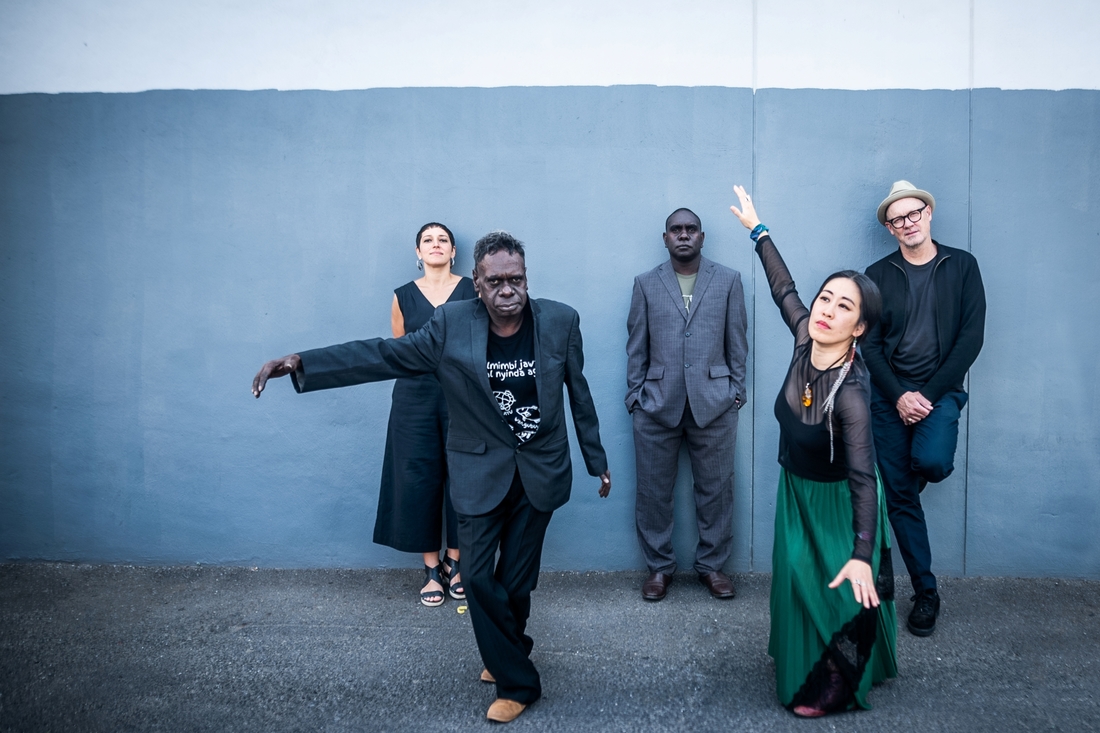
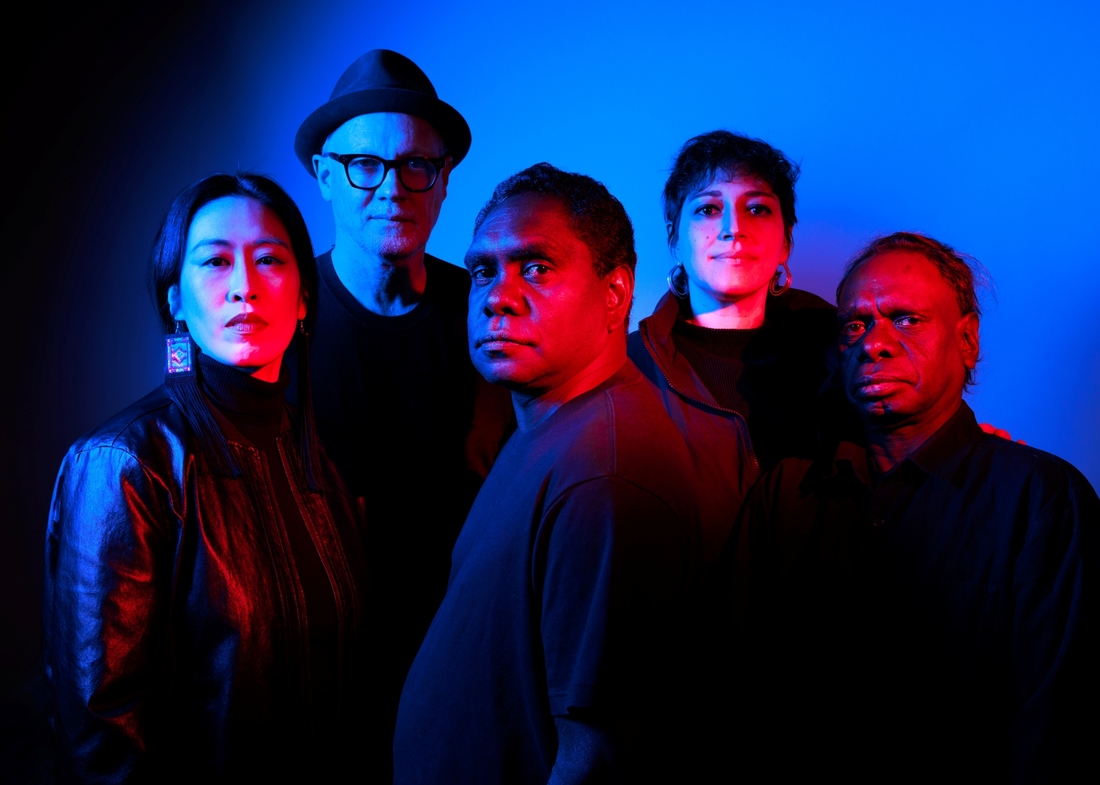
Hand to Earth's music making process is unique, asserts Knight, whose website homepage features a photo of him holding tin cans on strings to each ear, and whose current third solo album
For A Moment the Sky Knew My Name is – like
Ŋurru Wäŋa – released on Room40, the imprint owned by Australia-based polymath Lawrence English, an internationally lauded sound artist, field recordist, performer and practitioner of musique concréte (recorded sounds as raw material) intent on investigating the transformative potential of sound.
"[Hand to Earth] is not free improvisation but it's not composed either. It is somewhere in-between," Knight says. "We're weaving the threads of our different histories, lives and perspectives to become family."
This philosophy dovetails with the Wägilak concept of
raki, literally the bush string made from rolled pandanus fibre woven together to make traditional 'dilly' bags for holding tools and collecting food - and metaphorically the thread that brings people together to dance, sing and play music.
"
Raki makes sense of our process," says Knight. "Often when an ancient cultural tradition fuses with contemporary Western traditions, I'll ask, 'What are the Western musicians doing there?' But when our engagement is underpinned with this cultural practice of inclusion, of us merging to make a new song or build on a songline"—the sonic maps/multidimensional tracks that follow the paths of ancestors and creators in the dreaming and are essential to navigating Country—"we are part of it whether we like it or not."
The absence of a score when collaborating with First Nations Australians is additionally liberating: "There's a cultural hegemony embedded in a score that makes authentic connections difficult. We try to start from nothing and just be present and open. As settler musicians we're used to schedules and plans, which contrasts with the way that David and Daniel work.
"In Ngukkar, when there's a
bunggul" (a traditional meeting place of song, dance and ritual) "people gather to eat and talk, then a song will start, then there'll be dance, then things will subside and become intense again. It's a bit like a session in an Irish pub," he adds with a smile. "There's a natural flow to everything that is also about attending to relationships."
Hand to Earth, then, approaches sound as relational listening, and improvisation as a relational space. They embody the essence of Lawrence English's Relational Listening Theory - a creative process "intended to make one's listening audible to an audience" (Sannicandro 2018). Their relationship with the idea of Australia, a vast and challenging continent whose apparent uninhabitability underscores the ingenuity of its traditional owners, duly involves regarding the continent as one great improvisation — the bold notion with which composer/pianist Paul Grabowsky founded the Australian Art Orchestra in 1994.
Grabowsky had returned to Melbourne after a stint in Europe, where he was dazzled by anything-goes brilliance of Mathias Rüegg's Vienna Art Orchestra. He wrote a suite of music for a large ensemble and needed a cast to play it - the AAO's ensuing 1995 album
Ringing the Bell Backwards, a meditation on memory via the reimagining of European wartime songs, was hailed as a masterpiece. The AAO proceeded with some of Australia's most exciting collaborations. Among them, crossovers with musicians from India, Indonesia and most fruitfully, the traditional songmen of Ngukkur in Australia's south-east Arnhem Land.
It was Grabowsky (artistic director of Adelaide Festival 2010-2012; 2021 artist-in-residence for the Melbourne Symphony Orchestra and 2024 artist-in-residence for the Melbourne International Jazz Festival), who originally travelled to Ngukkur in 2004 to meet with the traditional songmen who maintained ceremonial observance across a large swath of their country ("Within minutes they were singing the Djawulparra manikay to me," Grabowsky has said. "Nothing prepared me for the sheer visceral power of this music") (Grabowsky 2023).
Having sought permission to return from significant Ngukkar elder and visual artist Djambu 'Sambo' Barra Barra, Grabowsky returned the following year with 10 members of the AAO as well as renowned (now late) Indigenous singer/songwriters, Ruby Hunter and her partner Archie Roach. Crossing Roper Bar (2005 - 2012) featuring the Young Wägilak Group went on to tour Australia and became a two-volume album. 2021's
WATA: a gathering of manikay performers, improvising soloists and orchestra and 2023's
Raki followed.
"Paul recognised that we live in a place of abundance, and as artists and jazz musicians we need to respond to what is around us rather than look to Europe and America for inspiration," says Knight. "We're in an era of dialogue around the post-colonial politics of an Australia that has been dominated by European cultures for the last 200 years and is now finding its place in Asia."
"It is always through improvisation that we manage to connect. Improvising is critical to most non-Western cultures and gives us powerful possibilities. Sound is the oldest form of human creative expression and sound is what we offer to each other in the moment."