The Monthly Dig - April 2026

The Monthly Dig - April 2026

4 hours ago

Written by:

Dragoș Rusu

Share article:
Here's your monthly music companion, with a selection of albums and compilations released in April. From afrobeat to experimental, jazz, electronics, psychedelic rock and beyond; both new releases and reissues.

What's new, what's good, what's hot or not, what's obscure or under the radar, music wise, here's the Monthly Dig. If you think that we've missed something or want to send a tip, please get in touch.

From Bibiotheca Hermetica to Fauna

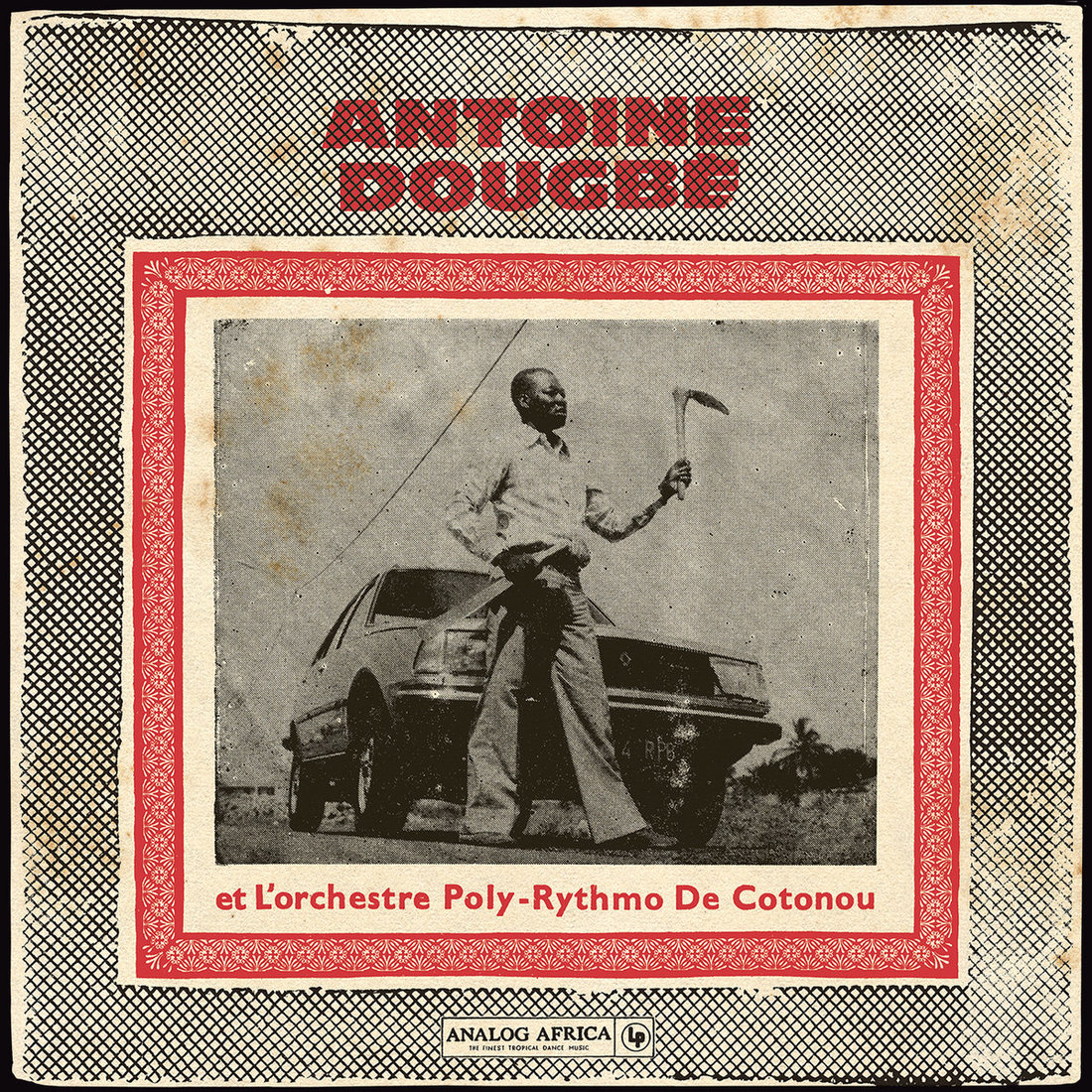
Antoine Dougbé et L'Orchestre Poly-Rythmo De Cotonou 1977 - 1982 (Analog Africa)
Ayman Fanous - Brooklyn Stories 1-5 (Infrequent Seams)
Ayman Fanous has been described as a “master musician/composer pursuing the most imaginative alternatives to the status quo… who has honed distinctive and unconventional methods on both guitar and bouzouki, managing to synergize classical, flamenco, and free jazz techniques” (Karl Ackerman). In addition to the guitar, Fanous also reaches back into his Egyptian ancestry in improvisations on the bouzouki. This is informed by many years of absorbing influences from the musical traditions of the Arab world, Turkey, India, North Africa, Persia, and the Balkans.

Antoine Dougbé et L'Orchestre Poly-Rythmo De Cotonou 1977 - 1982 (Analog Africa)
Antoine Dougbé was not merely one of the most inventive songwriters to emerge from the fertile music scene of Cotonou, but also a powerful Vodún initiate whose close connection to the spirit world allowed him to refer to himself as “the Devil’s prime minister.” Dougbé released three LPs and a handful of singles under his own name, the first, which appeared in 1977 on Disques Tropiques. And although Dougbé achieved moderate success with the early single “Nounignon Ma Kpon Midji”, his other records never quite found the audience they deserved, and by the early eighties he had vanished from the music scene.

Bibiotheca Hermetica - One (Black Editions)
Recorded in 1996 and released without any identifying credits in an essentially private cassette edition, Bibiotheca Hermetica’s sole release, One, was only the second by the Japanese La Musica label and remains one of its more obscure and enigmatic entries. “A group that deconstructs and liberates the chance nature of contemporary classical and noise music to such an extent that their boundaries blur. Their policy of fucking up musical relationships both acknowledges and ignores tradition and is totally different from previous strictly organised methods of composition. A work tonally constructed of foreboding musical vibrations.” - from the original La Musica cassette release.


Fauna - Taiga Trans (Glitterbeat Records)
Taiga Trans, the debut album from Fauna, is a hypnotic collision of krautrock propulsion, psychedelic ritual, and subterranean rave energy. The eight-piece Swedish collective channels a multicultural, multidimensional sound that feels both deeply rooted and otherworldly. Think Goat’s feral mysticism, Can’s motorik drive, and a dancefloor at its most transcendental.
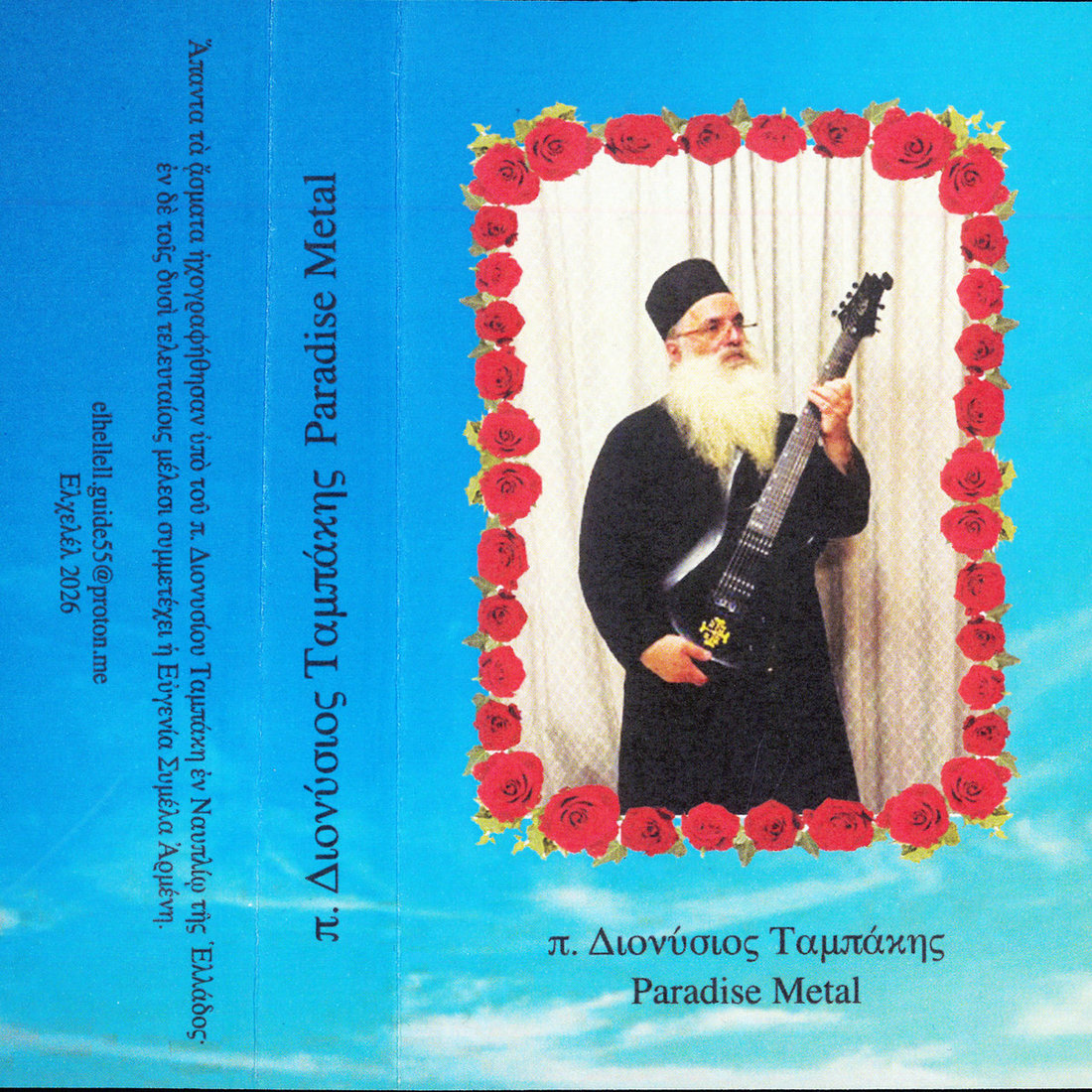
Fr. Dionysios Tabakis - Paradise Metal (Heat Crimes)

From Félicia Atkinson to Lei Liang

Félicia Atkinson & Christina Vantzou - Reflections Vol. 3: Water Poems (RVNG Intl)
On Reflections Vol. 3: Water Poems, Félicia Atkinson and Christina Vantzou channel their friendship and atmospheric artistry into ceremonial focus. Spoken-word environments and orchestral imagination flow like tributaries into a unified stream, resulting in a collection of dreamlike songs and soundscapes anchored in sea, sky and stone. Through electro-acoustic instrumentation, voice, and environmental sound, Water Poems invites listeners into a subconscious space somewhere between everyday intimacy and the oceanic enigma from which all life unfolds.

Fr. Dionysios Tabakis - Paradise Metal (Heat Crimes)
Fr. Dionysios Tabakis is a priest of the Orthodox Church. He serves at the Church of Panagitsa in Nafplio, the Nativity of the Theotokos, and records alone, at home. The music made in that house does not announce itself. It arrives from somewhere older than genre, older than the distinctions we use to organize sound. Tabakis is a musician of the Eastern Mediterranean in the fullest sense: formed in Byzantine theory and practice, fluent on qanun, oud, cümbüş, ney, zurna, Politiki and Pontic lyra, kabak kemane, yali tanbur. The system he works within is Byzantine, not as aesthetic choice or cultural reference, but as logic. The scales, the intervals, the way a note moves toward or away from another: this is the operating system. What emerges is slow, heavy, meditative, drone that carries the mass of stone walls and sustained prayer. It is still Byzantine music.

How to See Know and Fall - Ecologies (Adhyâropa Records)
How to See Know and Fall is an immersive collaboration between interdisciplinary percussionist/composer Brian Shankar Adler and electronic composer/software designer Jesse Stiles, combining intricate hybrid percussion with shimmering synth lines and ambient textures. Live performances transform the stage into a dreamlike audiovisual environment where polyrhythms collide with real-time generative video, weaving data and machine learning processes into a visceral tapestry of sound and light. By bridging far-reaching rhythmic traditions and cutting-edge electronics, How to See Know and Fall offers audiences a revelatory experience at the cross-hairs of music, technology, and digital art.


Lei Liang - Six Seasons: Instrumentation Lab (New Focus Recordings)
Lei Liang crafts multi-disciplinary works that bridge scientific research, electroacoustic composition, and contemporary improvisation to create a cohesive message of holistic symbiosis. Partnering with musicians from Ensemble Dal Niente, Mivos Quartet, loadbang, [nec]shivaree, and pianist Stephen Drury, Lei Liang’s newest release is an ambitious snapshot of his current aesthetic direction.
V.A. - The Pain of Separation: Turkish Gazels, 1926-1935 (Death Is Not The End)

From Loula Yorke to Musica Transonic

Loula Yorke (featuring Charlotte Jolly) - Salix (Truxalis)
Salix is a bold new departure for modular synthesist Loula Yorke, seen here using an antique reed organ to explore the ancient roots of willow trees in magic, myth and medicine, as well as inviting another musician into her recording studio for the first time, clarinetist Charlotte Jolly.

Metropolis Ensemble, Erik Hall, Sandbox Percussion - Canto Ostinato (Western Vinyl)
Metropolis Ensemble's Andrew Cyr, musician/composer Erik Hall and the members of Sandbox Percussion all found each other on this album, marking a world-class collaboration that yields an expansive and beautifully detailed new presentation of ten Holt's iconic work.

Musica Transonic + Mainliner - Solid Static (Black Editions)
Wild, heavy electric sessions recorded in 1997/98 featuring the classic Mainliner & Musica Transonic lineup of Nanjo Asahito, Kawabata Makoto and Yoshida Tatsuya driving into divergently fried terrain(s). Here, Nanjo and co. are on a quest to find new directions, and while the sessions were for an abandoned Mainliner album, a good portion of Solid Static hews more closely to the moment-to-moment deconstructions of Musica Transonic.


V.A. - Nava Spațială (Remixes) (New Romanian Weird)
The Romanian infamous project Nava Spațială celebrated 15 years of existence last year. The ambient/drone/noise duo chose to mark the passing of these years with a remix album. Admina, Andrei Raicu, Cocalar Cosmos; Michi and Mathmatrix are among the 15 Romanian artists who contributed to the remix compilation. 15 reasons to celebrate sonic deconstruction.

V.A. - The Pain of Separation: Turkish Gazels, 1926-1935 (Death Is Not The End)
A collection of spellbinding, melismatic vocal improvisations taken from 78s cut between the mid-1920s to mid '30s - a period defined by the aftermath of the Ottoman Empire’s partition, the Greco-Turkish War and the compulsory population exchange that followed.
About the Author

Dragoș Rusu

Co-founder and co-editor in chief of The Attic, sound researcher, DJ, and allround music adventurer, with a keen interest in the anthropology of sound.

@dragos_rusu_
Share this Article